Top 5 Kansas news stories
July 20 2026


Regulators Close Lenexa Bank, Oakley Lender Takes Deposits
Parsons' Mile-Deep Reactor Misses Federal Criticality Deadline
Kansas Logs 156 Fireworks Injuries Under Expanded Sales Law
K-State Opens Stadium-Wide Alcohol Sales to Boost Revenue
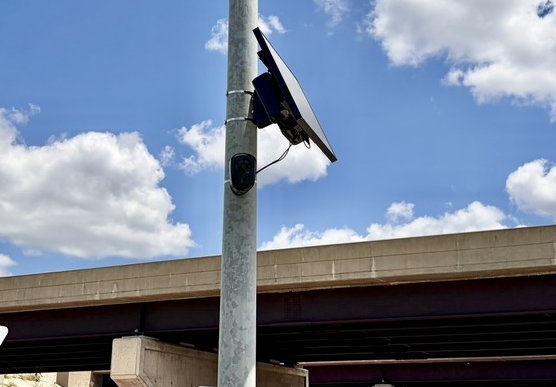
Plate-Reader Cameras Spread in Kansas, Raising Privacy Questions
Regulators Close Lenexa Bank, Oakley Lender Takes Deposits
LENEXA, Kan. — The Kansas Office of the State Bank Commissioner closed Small Business Bank on Friday, July 17, and appointed the Federal Deposit Insurance Corporation as receiver, marking the fourth U.S. bank failure of 2026 and the second in a single week. The Farmers State Bank of Oakley agreed to assume nearly all deposits and purchase certain assets, and the failed bank's single branch reopened Monday as a Farmers State Bank location, so customers keep their accounts, deposits remain federally insured and no action is required. Small Business Bank held about $73 million in assets and roughly $69 million in deposits as of March 31, and the FDIC preliminarily estimates the failure will cost its insurance fund about $5.7 million. Regulators said the bank had posted operating losses for years and had become critically undercapitalized, a legal threshold that requires action. While failures remain rare and insured depositors are fully protected, the closure signals the financial strain on some small community banks that serve local businesses and rural areas.
KCTV5 · KSHB · ABA Banking Journal
Parsons' Mile-Deep Reactor Misses Federal Criticality Deadline
PARSONS, Kan. — Deep Fission, the California startup building what would be the world's first mile-deep nuclear reactor at the Great Plains Industrial Park, did not reach criticality — a sustained, controlled nuclear reaction — by the July 4 target set under President Donald Trump's Executive Order 14301 and the U.S. Department of Energy's Reactor Pilot Program. Four other companies — Antares Nuclear, Valar Atomics, Aalo Atomics and Deployable Energy — hit the milestone by the deadline, according to industry assessments published in mid-July. Deep Fission broke ground in Parsons in December 2025, received its prototype reactor canister July 8 and now targets full-power operation in early 2027. The company's design places a 15-megawatt pressurized-water reactor fueled by low-enriched uranium in a borehole about a mile underground, an approach it says is cheaper and safer than surface plants. The July 4 goal was widely seen as aggressive, and the miss underscores the technical and regulatory hurdles facing a first-of-its-kind project that has made Kansas a proving ground for a novel energy technology.
ANS · Energies Media · World Nuclear News · Lawrence Times
Kansas Logs 156 Fireworks Injuries Under Expanded Sales Law
TOPEKA, Kan. — Health care providers documented 156 fireworks-related injuries in Kansas between June 20 and July 7, the period when fireworks could be legally sold and used, according to the State Fire Marshal's updated 2026 report released July 17. At least 25 of the injured were sent to a burn or trauma center, needed surgery or required a higher level of care, and 28 were children under 8. Fire marshal agents conducted nearly 500 inspections of fireworks sellers — up 37% from 2025 — and found 240 violations of the Kansas Fireworks Act, including missing or inaccessible fire extinguishers and improperly posted no-smoking signs, while seizing thousands of illegal fireworks. The June 20-July 7 window reflects a 2025 state law that expanded the number of days fireworks may legally be sold in Kansas. Because injury figures are self-reported by health care providers, the true total may be higher. The report puts concrete numbers on the public-safety cost of the state's more permissive rules, and the share of young children hurt is likely to factor into ongoing debate over how tightly Kansas should regulate consumer fireworks.
KWCH · KCTV5 · KSNT · Kansas State Fire Marshal
K-State Opens Stadium-Wide Alcohol Sales to Boost Revenue
MANHATTAN, Kan. — Kansas State Athletics Director Gene Taylor announced Thursday, July 16, that beer, wine, seltzers and canned cocktails will be sold throughout Bill Snyder Family Stadium beginning with the Sept. 5 season opener against Nicholls State, ending a policy that confined alcohol sales to a few designated beer-garden areas. Buyers must be 21 or older and show identification, purchases are capped at two drinks per person per transaction, and all sales stop at the end of the third quarter, while the school's longstanding re-entry policy allowing fans to return to tailgates will continue. Taylor said the change followed years of study and would provide the department additional revenue in the new era of collegiate athletics while helping keep fans in their seats. The move fits a national trend of public universities expanding stadium alcohol sales, and it comes as Kansas' regent universities absorb a 2.5% cut in state operating funds and raise tuition for the 2026-27 year. The shift at one of the state's most-watched fan institutions shows how big public universities are chasing new revenue amid tight state budgets and the rising cost of paying college athletes.
K-State Athletics · WIBW · KSNT
Plate-Reader Cameras Spread in Kansas, Raising Privacy Questions
NEWTON, Kan. — Newton police announced July 14 that they have deployed Flock automated license-plate-reader cameras to aid criminal investigations, joining a growing list of Kansas agencies adopting the technology, and a July 17 Flock news release spotlighted a Kansas case as an example of its reach. The cameras photograph passing license plates and automatically alert officers when a plate matches a vehicle on a watch list. In the highlighted case, a Flock camera in Chase County flagged a car tied to the June 8 fatal shooting of 64-year-old James Dodds in Kansas City, Kan., and the alert led Newton police and Harvey County deputies to stop the vehicle on Interstate 135, where three 18-year-old suspects were taken into custody and now face first-degree murder charges in Wyandotte County. Supporters say the cameras solve crimes that once went cold, while civil-liberties advocates warn that a growing web of readers can track ordinary drivers' movements and store that data with limited oversight. Adoption has accelerated across small and mid-sized Kansas departments over the past year, building a surveillance network that is reshaping day-to-day policing and leaving unresolved questions about privacy and data retention.
KWCH · Ad Astra Radio · GlobeNewswire
Sources
- KCTV5 / KSHB / ABA Banking Journal
- ANS / Energies Media / World Nuclear News / Lawrence Times
- KWCH / KCTV5 / KSNT / Kansas State Fire Marshal
- K-State Athletics / WIBW / KSNT
- KWCH / Ad Astra Radio / GlobeNewswire
This article was written using our proprietary AI system, Cronkite. The final decision to publish this article was made by a human. For more info, read our AI policy.
Found a mistake? Have a news tip or feedback to share? Contact our newsroom using the button below:
citizen journal offers three flagship products: a daily national news summary, a daily Kansas news summary, and local news and school board summaries from 20 cities across Kansas. Each issue contains 5 paragraph-length stories that are made to be read in 5 minutes. Use the links in the header to navigate to national, kansas, and local coverage. Subscribe to each, some, or all to get an email when new issues are published for FREE!
Brought to you by (click me!)
