Kansas health officials warn residents to guard against tick bites this season
Information obtained from renocountyks.gov

TOPEKA, Kan. — Kansas health officials are urging residents to protect themselves from tick bites as warming temperatures bring increased tick activity across the state.
The Kansas Department of Health and Environment issued guidance Wednesday reminding Kansans that several tick species found in the state can transmit serious diseases, including ehrlichiosis, Rocky Mountain spotted fever, tularemia and Alpha-Gal Syndrome, a red meat allergy triggered by tick bites.
"Ticks are commonly found in grassy, wooded, and brush-covered areas and can be present in backyards, parks, and along trails," said Dr. Erin Petro, KDHE state public health veterinarian. "While most tick bites do not result in illness, tick bite prevention remains the most effective way to reduce the risk of disease."
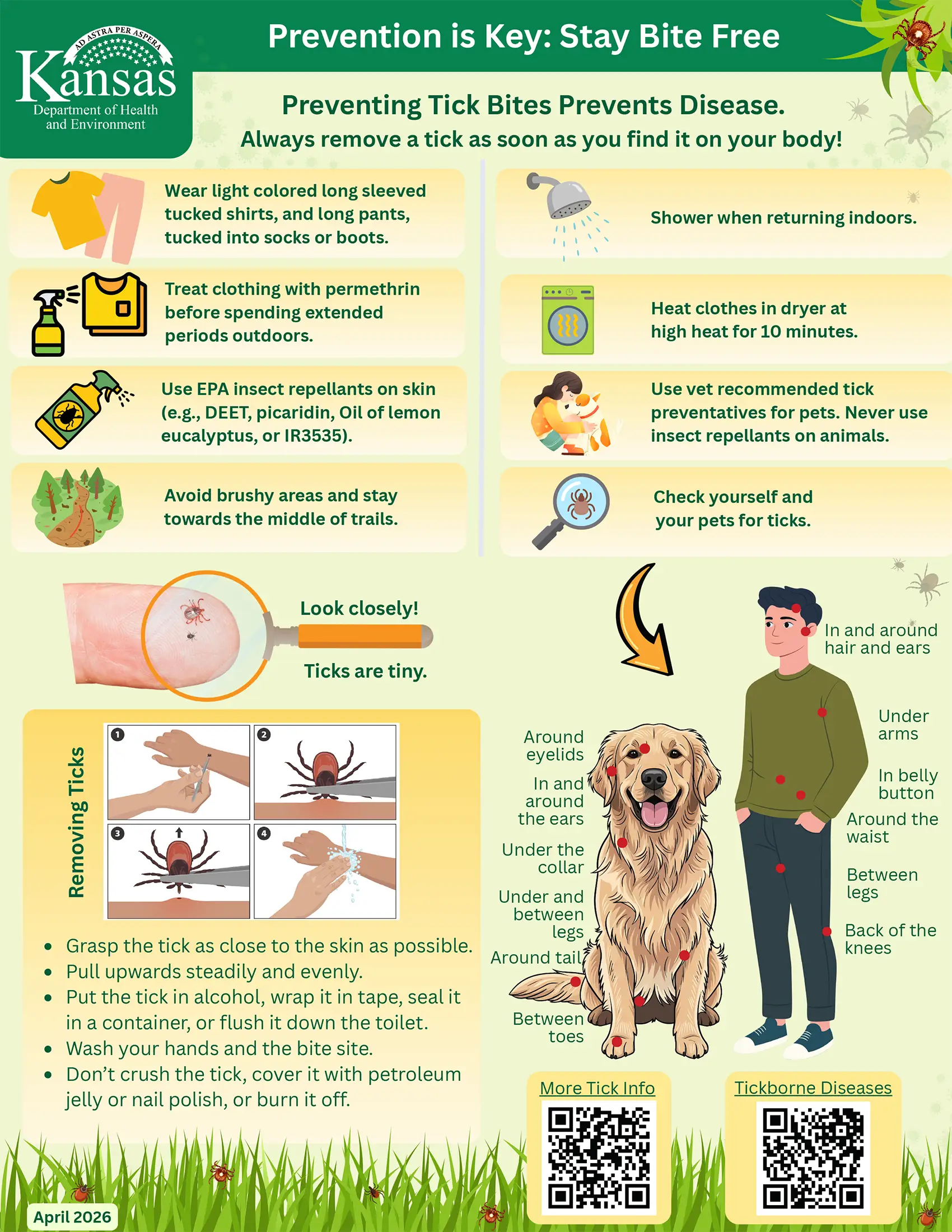
Officials recommend applying EPA-registered insect repellents containing DEET, picaridin, IR3535 or oil of lemon eucalyptus before heading outdoors. Clothing and gear can also be treated with permethrin-based products for additional protection. When possible, residents should wear long sleeves and pants, tuck pants into socks and stay to the center of trails.
After returning indoors, KDHE advises conducting a full-body tick check, paying special attention to areas under the arms, behind the knees, around the waist, behind the ears and in the hair. Ticks range in size from a poppy seed to an apple seed and may resemble a small bump or mole on the skin once attached and feeding. Parents are encouraged to check children carefully after any outdoor activity. Showering within two hours of coming inside and running clothing through a dryer on high heat for at least 10 minutes can help eliminate ticks that may have been missed.
If a tick is found attached to the skin, health officials say it should be removed promptly with fine-tipped tweezers by grasping the tick as close to the skin's surface as possible and pulling outward with steady, even pressure. Twisting, jerking or crushing the tick should be avoided. The bite area should then be cleaned with soap and water, and the tick disposed of by flushing it down the toilet, placing it in alcohol or securing it between two pieces of tape.
KDHE advises monitoring for symptoms — including fever, headache, fatigue, muscle aches or rash — for two weeks following a tick bite or outdoor exposure in tick habitat. Antibiotic treatment is not recommended unless symptoms develop. Anyone experiencing symptoms should contact a healthcare provider and disclose possible tick exposure.
Pet owners are also advised to consult their veterinarian about year-round flea and tick prevention for animals.
More information about ticks and tickborne diseases in Kansas is available on the KDHE Tickborne Disease in Kansas webpage.