Wildfires Scorch Hundreds of Thousands of Acres Across Southwest Kansas
Extreme winds hampered aerial firefighting as agricultural communities rally to support displaced ranchers

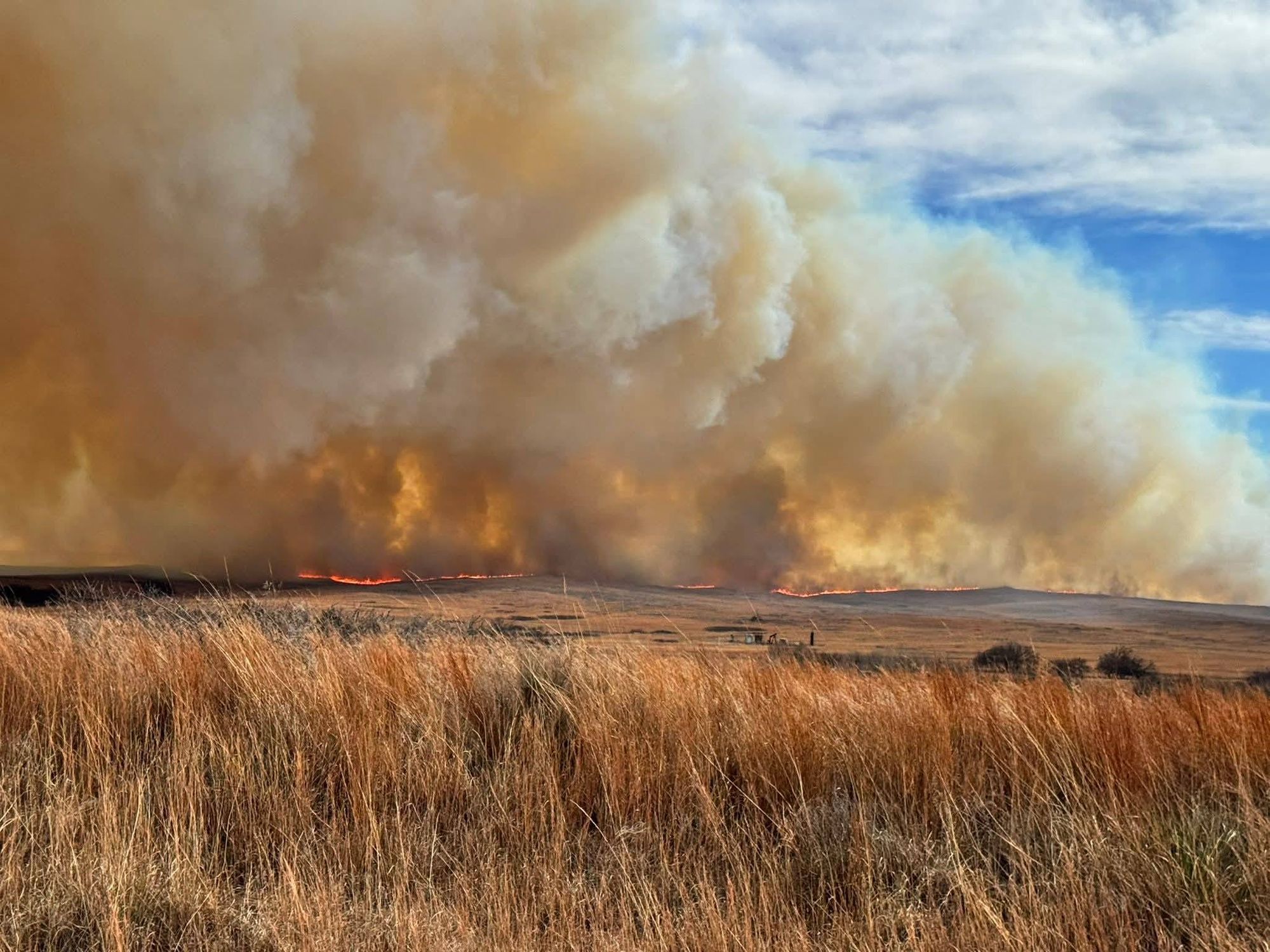
ASHLAND, Kan. — Wildfires fueled by powerful winds swept from the Oklahoma panhandle into southwest Kansas this week, burning nearly 283,000 acres across multiple counties and marking the second time in a decade that a massive wildfire has struck the Ashland area. The blazes, which tore through Clark, Seward, Meade, Finney and Comanche counties, forced evacuations, displaced families and stretched emergency resources across the region. By Wednesday evening, fires that had erupted near Coldwater in Comanche County were contained, though crews remained on watch for spot fires.
The extreme conditions severely limited firefighters' options during the worst of the crisis. Wind speeds were so dangerous that aerial crews, including the Kansas Forest Service's Air Tanker 95, were grounded during the peak of the fires on Tuesday. "Weather conditions being what they were, it was just ... it was way too risky for us to be able to fly," said Rodney Redinger with the Kansas Forest Service. By Tuesday afternoon, winds had eased enough to allow aviation resources to resume operations, and the Kansas Division of Emergency Management deployed additional firefighters and task forces from across the state to assist local responders battling fires in Seward, Meade and Finney counties.
The wildfires dealt a heavy blow to the region's agricultural economy. Feedyard workers began closely monitoring cattle showing signs of respiratory distress from heavy smoke, including labored breathing and irritated eyes. Thousands of acres of grassland and cattle feed were destroyed, prompting farmers and ranchers from across Kansas to organize hay donations for those affected. The Kansas Livestock Association began fielding calls for help as soon as the scope of the damage became clear, coordinating relief efforts with local agricultural operations.
Amid the devastation, Ashland residents expressed determination to rebuild. Volunteers gathered water, food, working gloves and medical supplies for firefighters and displaced families. Bill Shaw, president of the Ashland Community Foundation, said the close-knit community has drawn on experience from past disasters. "We've been through this before as a community, and I feel like we've learned from that," Shaw told KWCH. As additional task forces arrive and containment efforts continue, the focus is shifting to recovery and supporting those who lost homes, livestock and land.