Top 5 US news stories: SPECIAL EDITION
February 28 2026

U.S., Israel Strike Iran in Regime-Change Campaign
Iranian Missiles Hit Six Countries, Forge Anti-Iran Gulf Coalition
Oil Majors Halt Hormuz Shipments
Israel Destroyed Ayatollah Khamenei Compound
Ex-Treasury Official: Sanctions Relief Must Start Now or Successor State Collapses
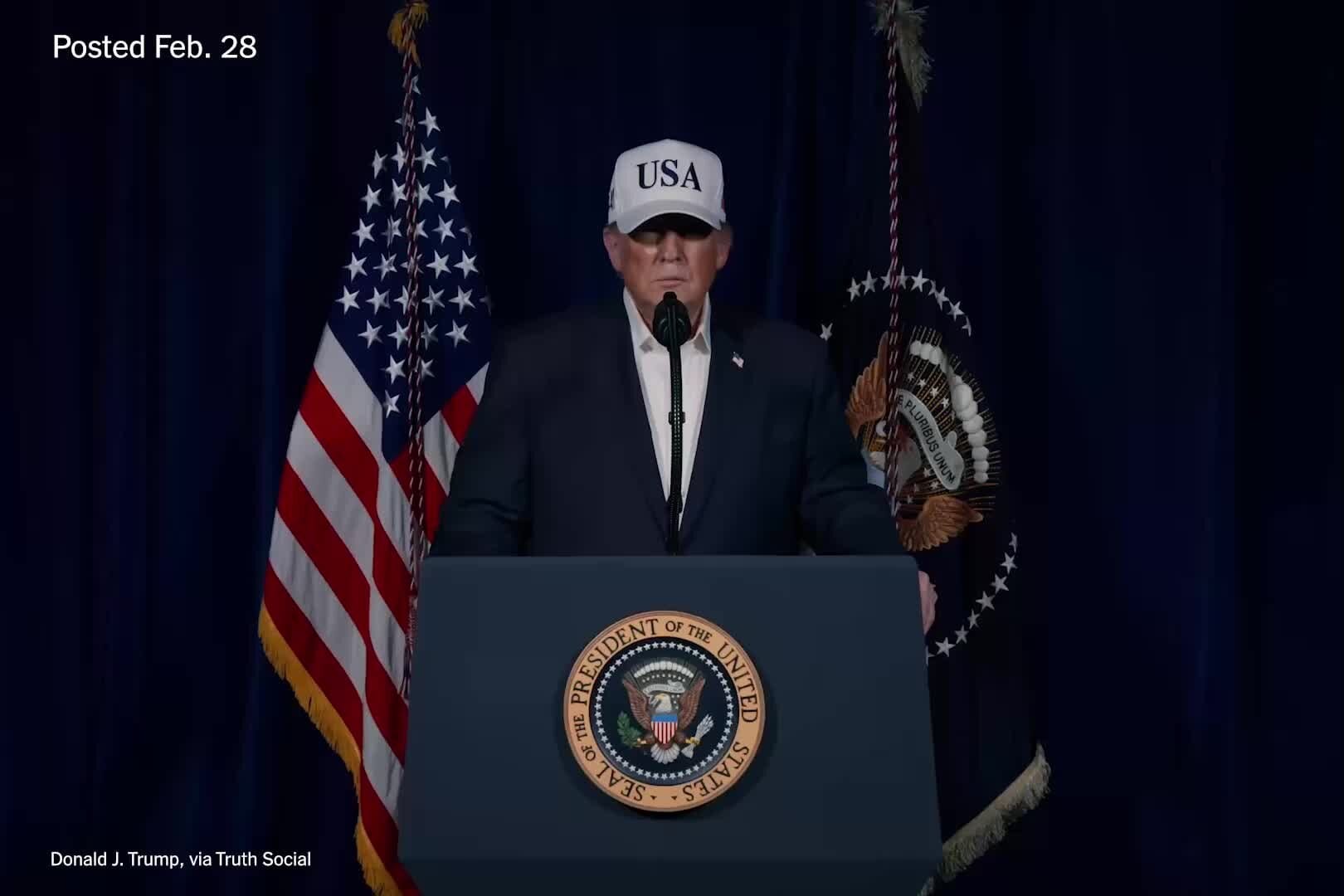
U.S., Israel Strike Iran in Regime-Change Campaign
WASHINGTON/TEL AVIV — The United States and Israel launched a joint military campaign against Iran shortly before 1 a.m. ET Saturday, targeting senior leadership and military infrastructure in what the Pentagon dubbed "Operation Epic Fury" — a multi-day operation aimed at regime change. President Donald Trump confirmed "major combat operations" and appealed directly to the Iranian people to "take over your government." In an eight-minute video address, Trump promised full immunity to any Iranian soldiers who lay down their arms. Israeli Prime Minister Benjamin Netanyahu called the regime a shared enemy and urged Iranians to rise up. Widespread cyberattacks accompanied the strikes, according to Politico, including a hack of Iran's popular "Bad Sabah" prayer-time app that pushed notifications reading "Help has arrived" and urging soldiers to defect; Iranian internet access dropped to 4%, per Netblocks. Reza Pahlavi, son of the late Shah whose family was deposed in the 1979 Islamic Revolution, framed the operation as directed at the regime's apparatus of repression, not the Iranian nation. Iran responded by launching ballistic missiles toward Israel and U.S. bases across the region. As of publication, Iranian state media and Western outlets reported that Supreme Leader Khamenei and President Pezeshkian remained alive in a secure location.
 Greg Loving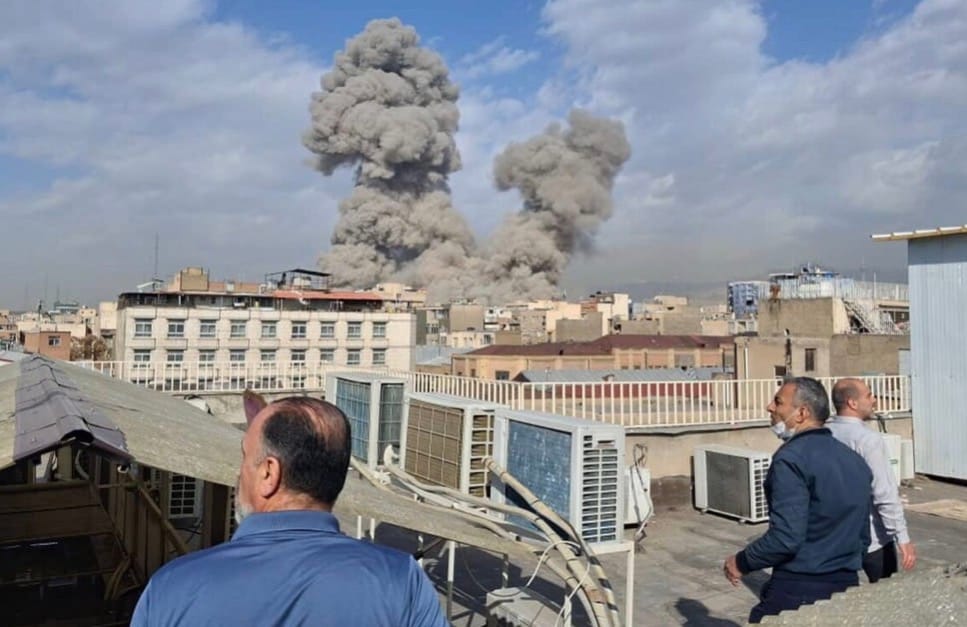
Iranian Missiles Hit Six Countries, Forge Anti-Iran Gulf Coalition
RIYADH — Iran launched retaliatory ballistic missiles at American bases and allied nations across the Middle East on Saturday, striking targets in Bahrain, Iraq, Israel, Kuwait, Qatar, Saudi Arabia and the UAE. One person was killed by debris in Abu Dhabi; four died from a strike in southern Syria. Saudi Arabia condemned the attacks as violations of Gulf sovereignty and pledged to support affected nations. In a significant development, Axios correspondent Barak Ravid reported the crisis prompted a phone call between Saudi and Emirati leaders despite unprecedented bilateral tensions. The broader rift spans proxy conflicts in Yemen, Sudan, Somalia and the Horn of Africa, making Saturday's call a notable diplomatic shift forced by the immediate security crisis.
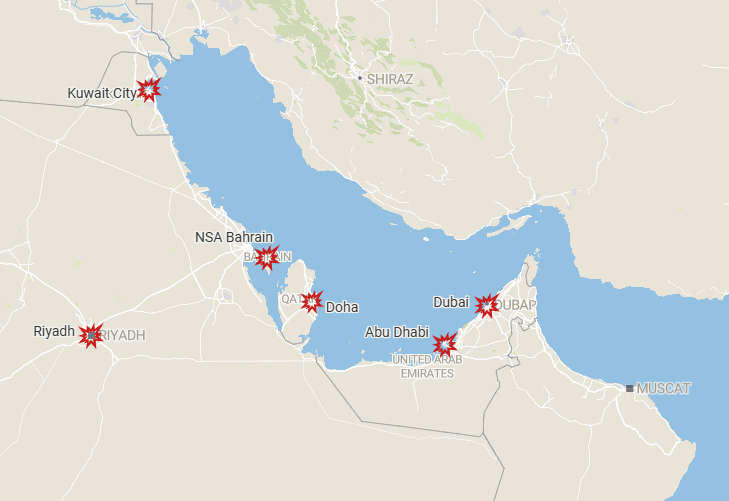
Footage shows the moment a missile explodes near a US Navy base in Bahrain. Bahraini state news says an attack has targeted the US Navy’s 5th Fleet headquarters. Explosions have also been reported across the Gulf, as Iran retaliates against the US and Israel's attack. pic.twitter.com/k62AR2L8G5
— Sky News (@SkyNews) February 28, 2026
Oil Majors Halt Hormuz Shipments
LONDON — Several major oil companies and trading houses suspended crude and fuel shipments through the Strait of Hormuz on Saturday as fighting between Israel, Iran and the United States threatened the world's most critical energy chokepoint. The strait carries approximately 20 million barrels of oil per day, about 20 percent of global supply. Brent crude closed at $72.48 Friday, the last session before the strikes; analysts project $75-plus at Monday's open and $80–$150 if supply disruptions materialize. The U.S. shale revolution has made America the world's largest oil producer and a net exporter, providing a buffer against Middle Eastern supply shocks — but it cannot offset the loss of 20 million barrels per day of transit capacity.
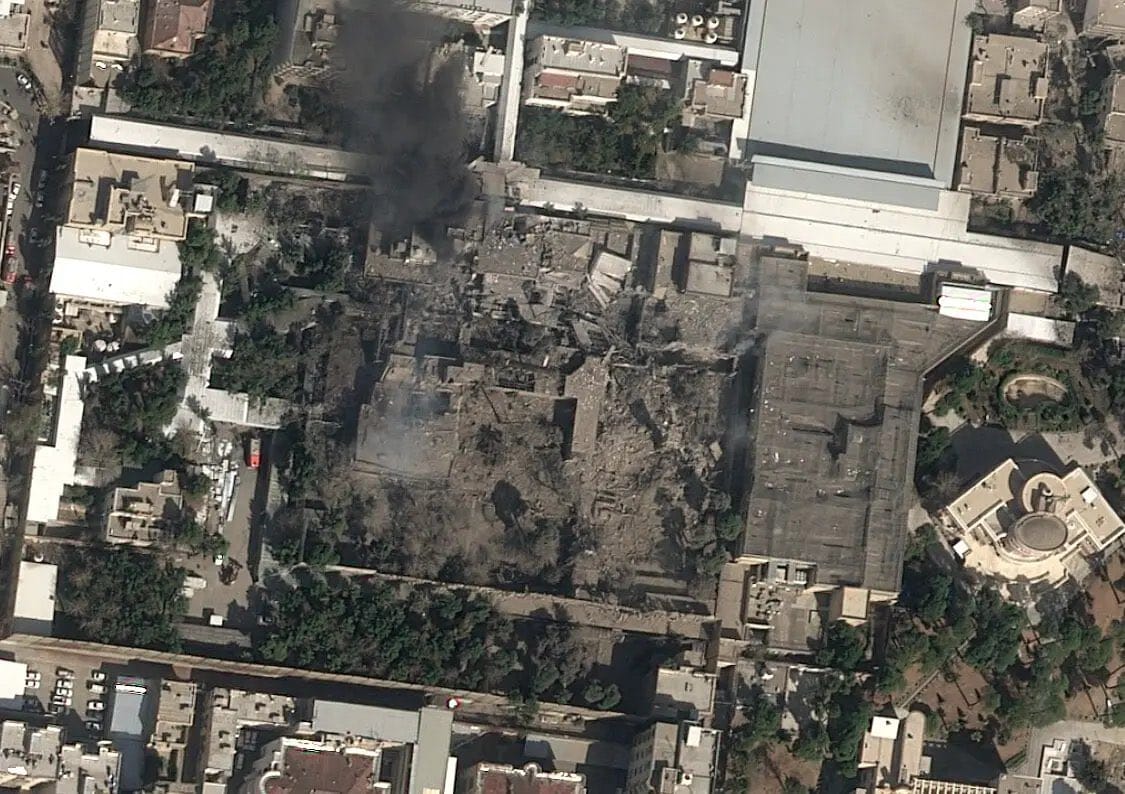
Israel Destroyed Ayatollah Khamenei Compound
TEHRAN — Satellite imagery from Airbus Defence and Space, obtained by the New York Times, shows the Tehran compound of Supreme Leader Ayatollah Ali Khamenei reduced to rubble by Israeli strikes Saturday morning. The Israeli military said the campaign was the product of months of intelligence work aimed at identifying the moment senior officials would convene in a single location. Israel chose to strike in daylight — a deliberate departure from nighttime operations in June 2025 and October 2024 — because the target was leadership, not infrastructure. Israeli officials confirmed strikes targeted Khamenei, President Pezeshkian, IRGC commander Mohammad Pakpour and security adviser Ali Shamkhani. Whether Khamenei was present or had been evacuated beforehand remains the central unresolved question. A Reuters source close to the Iranian establishment reported that several senior Revolutionary Guards commanders and political officials were killed, though this could not be independently verified.
Ex-Treasury Official: Sanctions Relief Must Start Now or Successor State Collapses
WASHINGTON — Miad Maleki, former associate director at Treasury's Office of Foreign Assets Control and a senior adviser at the Foundation for Defense of Democracies, warned Saturday that economic planning for a post-regime Iran must begin immediately. Maleki, who was born in Tehran and spent nearly eight years at OFAC designing the maximum pressure sanctions campaign, argued a transition government would have 100 to 180 days to prove it can govern. He pointed to Iraq, Libya and Syria as examples of what happens when regime change comes without economic planning. The U.S. sanctions architecture on Iran spans more than 30 years, five presidencies, over a dozen executive orders and at least 18 major legislative acts. Maleki warned that the same sanctions that weakened the Islamic Republic would cripple any successor government if not quickly addressed through targeted, phased relief.
Found a mistake? Have a news tip or feedback to share? Contact our newsroom using the button below:
citizen journal offers three flagship products: a daily national news summary, a daily Kansas news summary, and local news and school board summaries from 34 cities across 5 states. Use the links in the header to navigate to national, kansas, and local coverage. Subscribe to each, some, or all to get an email when new issues are published for FREE!
