Top 5 US news stories
December 8 2025

China Bypasses U.S. Tariffs to Clinch Record $1 Trillion Trade Gap
GOP Deadlock on Healthcare Subsidies Sparks Fears of Voter Revolt
Smallest U.S. Cattle Supply Since 1950s Drives Soaring Beef Costs, Triggers Trump Antitrust Probe
SpaceX Secondary Share Sale Doubles Valuation to $800 Billion, Crowning It Most Valuable U.S. Private Company
New Trump Doctrine Shifts U.S. Focus to Western Hemisphere, Drops Democracy-Versus-Autocracy Framework
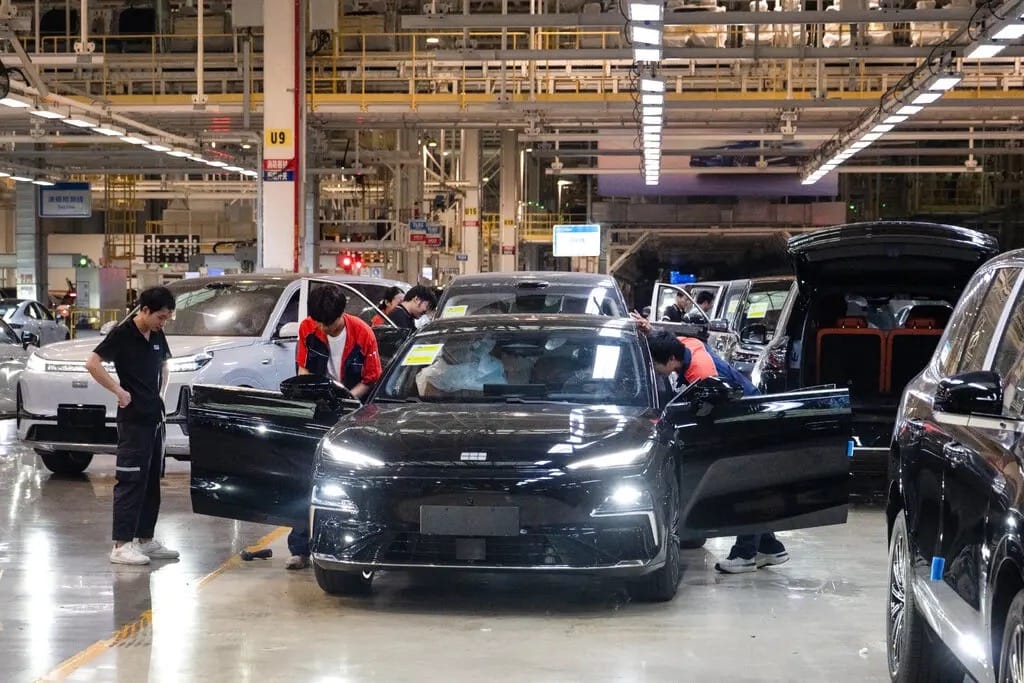
China Bypasses U.S. Tariffs to Clinch Record $1 Trillion Trade Gap
A. BEIJING—China’s trade surplus in goods this year topped $1 trillion for the first time, a milestone that underscores the dominance that the country has attained in everything from high-end electric vehicles to low-end T-shirts. For the first 11 months of the year, China’s exports increased 5.4% from the year-earlier period to $3.4 trillion, while the country’s imports declined 0.6% over that same stretch to $2.3 trillion. That brought the country’s trade surplus this year to $1.08 trillion, China’s General Administration of Customs said Monday. That remarkable figure, never before seen in recorded economic history, is the culmination of decades of industrial policies and human industriousness that helped China emerge from a poor agrarian economy in the late 1970s to become the world’s second-largest economy. China established itself as a maker of cheap wigs, sneakers and Christmas lights in the 1980s and 1990s, earning a moniker as the world’s factory floor. But that was just the beginning. In the years since, China has aggressively built on this foundation, climbing the ladder into higher-value goods and making itself an indispensable cog in global supply chains spanning technology, transport, medicine and consumer goods. In recent years, its leading-edge companies have established themselves as dominant players in solar panels, electric vehicles and the semiconductors that power everyday household items.
B. Tariffs imposed by President Trump on China have caused Chinese exports to the United States to drop by nearly a fifth. But China has throttled back its purchases of American soybeans and other products by almost the same rate, continuing to sell three times as much to the United States as it buys. China has ramped up considerably its sales to other countries. From cars to solar panels to consumer electronics, a tsunami of Chinese exports is flooding Southeast Asia, Africa, Europe and Latin America. Carmakers and other exporters in traditional manufacturing powerhouses like Germany, Japan and South Korea are losing customers to Chinese rivals. Factories in developing countries like Indonesia and South Africa have had to curtail production or even close as they struggle to match China’s low prices. Chinese companies have shifted final assembly of their goods to Southeast Asia, Mexico and Africa, which then ship finished products to the United States. This has allowed them to partly bypass Mr. Trump’s tariffs on goods coming straight from China.
WSJ, NYT
GOP Deadlock on Healthcare Subsidies Sparks Fears of Voter Revolt
WASHINGTON—Republicans have yet to coalesce around a healthcare strategy just days before an expected vote on extending enhanced Obamacare subsidies, triggering concerns from some GOP lawmakers about a voter backlash. The Senate is expected to vote this week on a Democratic-backed measure to extend the enhanced healthcare subsidies for three years. Senate Republican leaders agreed to hold the vote as a condition for ending the government shutdown. The Democratic proposal isn’t expected to pass, heightening the risk that the subsidies will expire and millions of people will see their healthcare costs rise starting next month. Republicans haven’t yet united around an alternative proposal, as they struggle with how—or whether—to extend the subsidies and address issues that animate conservatives such as healthcare fraud. Some Republican lawmakers are increasingly concerned that healthcare is a political vulnerability for many in the GOP, who campaigned for years on repealing the Affordable Care Act, but haven’t agreed on a healthcare plan of their own. “America is ready to see what Republicans are for,” said Republican Sen. Roger Marshall of Kansas. “If we don’t have a good economy next November and we don’t have the American dream start to be restored, we’re going to lose,” warned Marshall, a physician. On Monday, he is planning to introduce “The Marshall Plan Act,” adding to the growing list of healthcare-related ideas floating around Capitol Hill.
WSJ
Smallest U.S. Cattle Supply Since 1950s Drives Soaring Beef Costs, Triggers Trump Antitrust Probe
A group of President Trump’s top advisers have convened to tackle soaring beef prices, according to people familiar with the discussions, showing how the administration is escalating efforts to wrangle food inflation. Steak and ground beef have hit record highs this year, sending everyone including meatpackers, supermarkets and restaurants looking for ways to ease the pain. The problem: There is no easy way to bring down prices, which have climbed steadily since 2021. After the pandemic, ranchers decided to thin their cattle herds following years of weakening financial conditions. And because it takes about two years for the animals to reach maturity, the U.S. now has the lowest number of cattle on its pastures since the 1950s. Beef remains a popular protein for consumers to buy, contributing to the supply squeeze. Trump on Saturday called for the Justice Department and Federal Trade Commission to create task forces to examine whether anticompetitive behavior exists in U.S. food supply chains. The Justice Department has also launched a new antitrust investigation into meatpacking companies.

WSJ
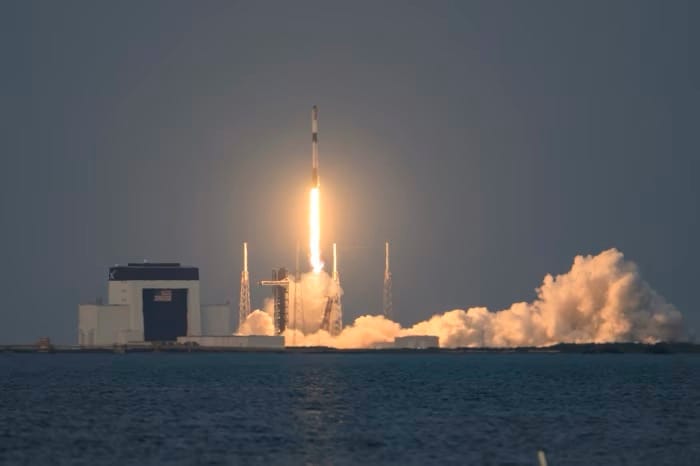
SpaceX Secondary Share Sale Doubles Valuation to $800 Billion, Crowning It Most Valuable U.S. Private Company
SpaceX is kicking off a secondary share sale that would value the rocket maker at $800 billion, people familiar with the matter said, surpassing OpenAI to make it the most valuable U.S. private company. The company’s Chief Financial Officer Bret Johnsen told investors about the sale in recent days, and SpaceX executives have also said the company is weighing a potential initial public offering in 2026, some of the people said. The $800 billion valuation is double the $400 billion value it fetched in a recent secondary share sale.
WSJ
New Trump Doctrine Shifts U.S. Focus to Western Hemisphere, Drops Democracy-Versus-Autocracy Framework
The Trump administration's newly released U.S. National Security Strategy establishes the Western Hemisphere as the nation's top priority, pledging to "assert and enforce a 'Trump Corollary' to the Monroe Doctrine." The document calls for a "readjustment of our global military presence to address urgent threats in our Hemisphere, and away from theaters whose relative import to American national security has declined in recent decades or years." The strategy's stated priorities include homeland security and border issues, hemispheric concerns, economic security including reindustrialization and supply chains, followed by China and the Indo-Pacific region. The document marks a significant shift in U.S. approach to China, no longer designating it as "the" primary threat or "pacing challenge" as previous strategies have done. Instead, China is characterized primarily as an economic competitor and source of supply chain vulnerabilities. The strategy acknowledges the goal of deterring conflict over Taiwan "ideally by preserving military overmatch" and suggests defending Taiwan could become "impossible" if regional allies don't increase defense contributions. Notably absent from the document is the democracy-versus-autocracy framing of recent years, with the strategy explicitly stating U.S. policy is "not grounded in traditional, political ideology" and seeks "good relations with nations whose governing systems differ from ours."
citizen journal
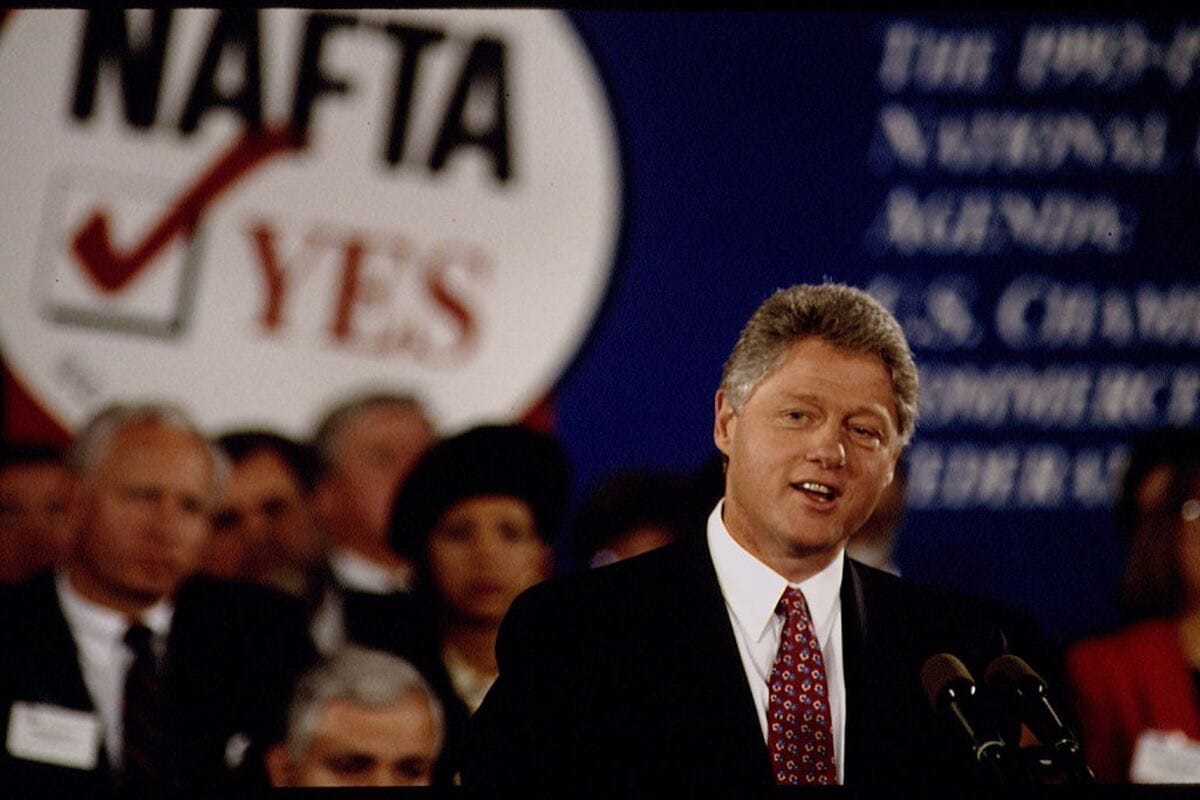
December 8 1993: NAFTA signed into law
NAFTA’s passage in 1993 became a powerful symbol of the broader turn toward globalized, rules-based trade that had already been encouraging U.S. firms to shift production overseas. The agreement reduced tariffs and investment barriers across North America, making it easier and cheaper for companies to move factories to Mexico while still selling into the U.S. market. Critics like Ross Perot warned of a “giant sucking sound” as jobs left industrial communities, and over time plant closures, wage pressure, and job insecurity in many manufacturing regions reinforced a perception that political and business elites had prioritized efficiency and corporate profits over the stability of blue-collar workforces. In this narrative, NAFTA became shorthand for a wider pattern of offshoring and deindustrialization rather than a standalone policy choice.
Economists and political thinkers such as James Buchanan, whose public-choice framework emphasized how policy often reflects the interests of organized elites more than dispersed voters, helped shape how some observers interpreted this era: not simply as an economic adjustment, but as a political realignment in which trade policy, campaign finance, and party leadership were increasingly seen as serving insiders. By the 2010s, anger over trade agreements like NAFTA, factory flight, and perceived elite indifference to working-class communities had become central themes in American politics. Donald Trump tapped directly into that resentment, denouncing NAFTA as “the worst trade deal ever made” and promising to renegotiate or replace it. His success in former manufacturing strongholds illustrated how decades of offshoring and the politics surrounding it—featuring early critics like Perot and intellectual frameworks associated with Buchanan—helped clear a path for his rise within the Republican Party and to the presidency.
We are temporarily pausing our podcasts as we revamp our app so any article can be read as audio
Found a mistake? Have a news tip or feedback to share? Contact our newsroom using the button below:
citizen journal offers three flagship products: a daily national news summary, a daily Kansas news summary, and local news and school board summaries from 29 cities across 5 states. Use the links in the header to navigate to national, kansas, and local coverage. Subscribe to each, some, or all to get an email when new issues are published for FREE!
Brought to you by (click me!)
Sources
- https://www.wsj.com/economy/trade/chinas-exports-rebound-in-november-97f24e06?mod=hp_lead_pos2
- https://www.nytimes.com/2025/12/07/business/china-trade-surplus.html
- https://www.wsj.com/politics/policy/the-gop-cant-agree-on-a-healthcare-plan-some-republicans-are-panicking-76b6d89e?mod=hp_lead_pos4
- https://www.wsj.com/business/spacex-in-talks-for-share-sale-that-would-boost-valuation-to-800-billion-b2852191?st=UzhyAU&reflink=article_copyURL_share
