Top 5 US news stories
April 13 2026


Trump Orders Naval Blockade of Strait of Hormuz After Iran Talks Collapse
Hormuz Blockade Hands Trump Fresh Leverage Over China
End of Pandemic Aid Squeezes Local Budgets Across U.S.
Artemis II Crew Splashes Down After Historic Lunar Flyby
AI Boom Strains Global Computing Capacity
Trump Orders Naval Blockade of Strait of Hormuz After Iran Talks Collapse
ISLAMABAD, Pakistan — President Donald Trump on Sunday announced a U.S. naval blockade of the Strait of Hormuz after marathon overnight talks between American and Iranian negotiators in Islamabad failed to produce a deal, threatening to unravel a tenuous two-week ceasefire reached just five days earlier. In a Truth Social post, Trump said the U.S. Navy would begin blockading any ship attempting to enter or leave the strait, and instructed commanders to interdict vessels that have paid Iran a toll for passage, calling Tehran's expanded control of the waterway "extortion." U.S. Central Command said the blockade would take effect Monday at 10 a.m. Eastern time. The move followed 21 hours of negotiations led by Vice President JD Vance, who blamed Tehran for refusing U.S. terms on its nuclear program.
Trump and his advisers are also weighing a resumption of limited military strikes inside Iran, according to The Wall Street Journal. Brent crude futures rose more than 7% on the news, trading firmly above $100 a barrel, as markets priced in the potential loss of roughly 2 million barrels per day of Iranian crude exports, most of which currently flow to China. U.S. officials said Iran has been unable to reopen the strait to broader shipping traffic because it cannot locate or remove all of the mines it laid in the waterway last month using small boats. Iran had left a narrow channel open for vessels paying a toll, a system the new U.S. blockade is designed to dismantle.
Washington Post / WSJ / NYT
Hormuz Blockade Hands Trump Fresh Leverage Over China
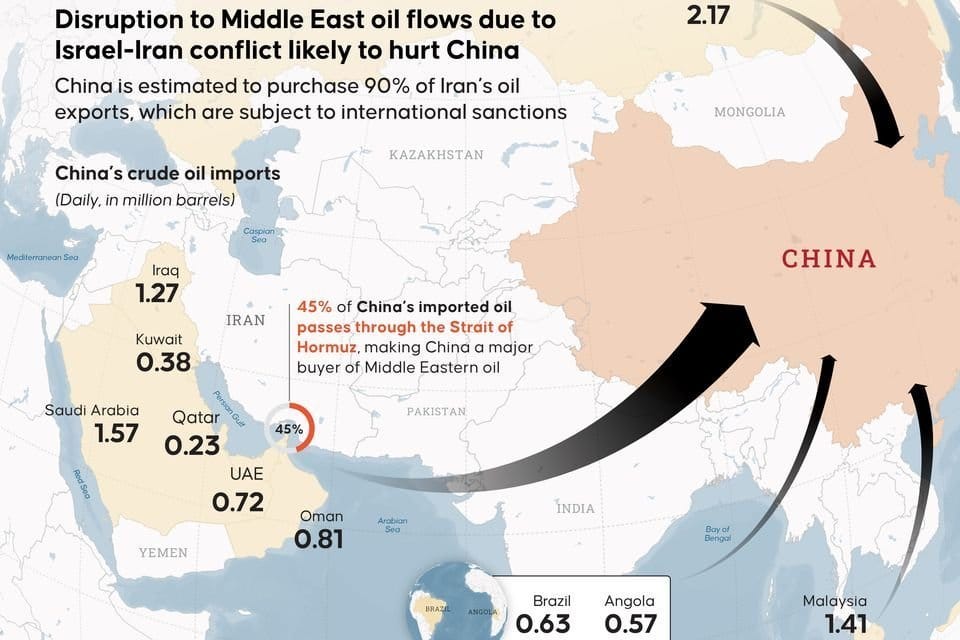
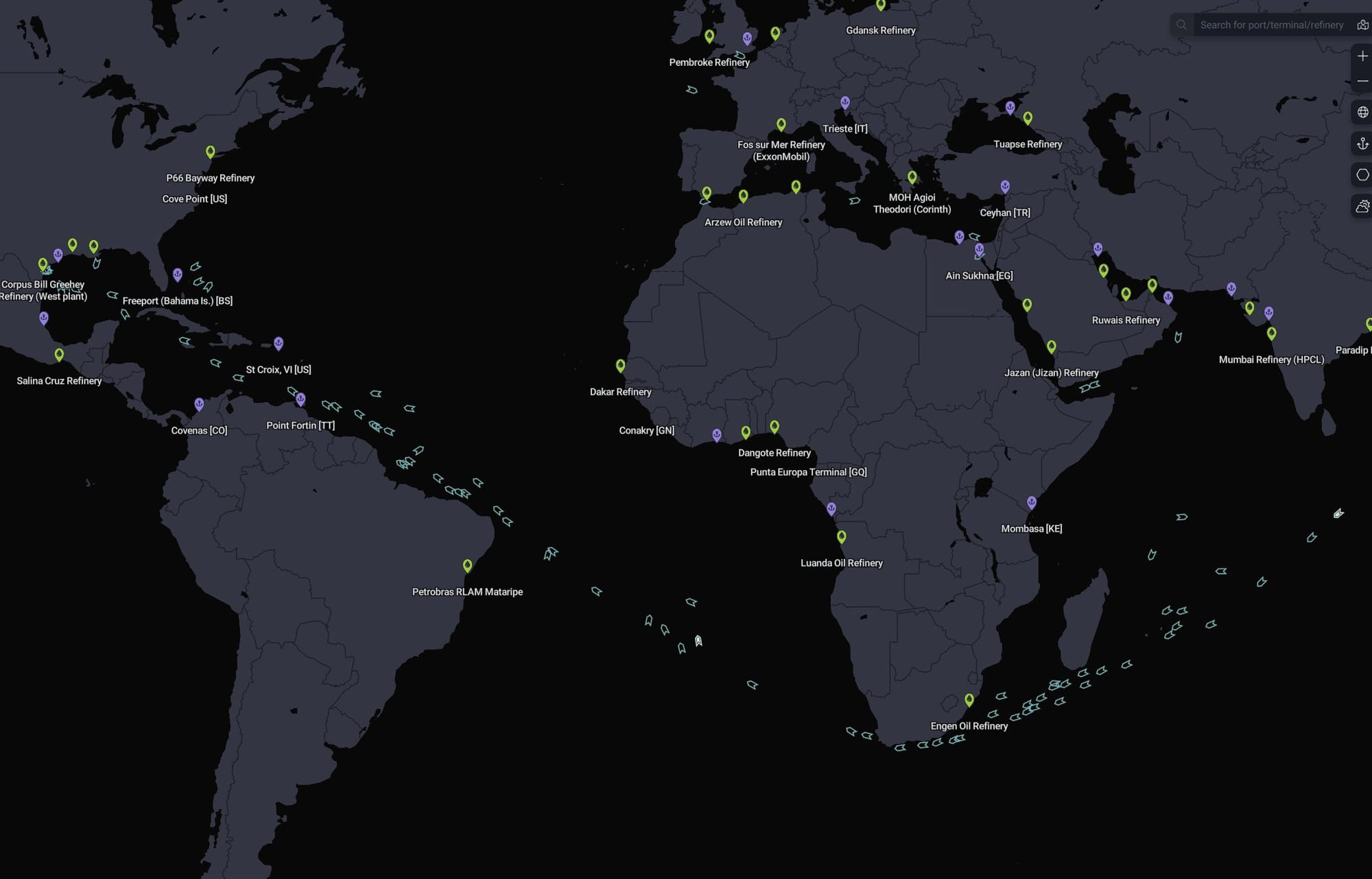
WASHINGTON — Trump's blockade announcement sharpens an emerging economic standoff with China, the largest buyer of Iranian crude and the country most exposed to a prolonged Persian Gulf shipping disruption. China imports roughly 1.38 million barrels per day from Iran, accounting for more than 80% of Iranian exports, and approximately 45% of all Chinese oil imports transit the Strait of Hormuz. On Monday, Beijing publicly called for unobstructed navigation through the strait, a day after Trump's blockade threat. Tanker tracking data show 172 crude carriers currently rerouting toward U.S. Gulf Coast ports, with traffic up 46% on the northern corridor from Europe and 132% on the southern corridor from Asia, as the U.S. Gulf becomes the primary sanctions-free region able to absorb redirected global demand.
China's leverage in any U.S. confrontation runs through critical minerals, and Trump's Hormuz move is best understood as Washington's counter. Beijing refines roughly 90% of the world's rare earths and manufactures 93% of its permanent magnets, the inputs behind U.S. F-35 fighters, Tomahawk missiles, Virginia-class submarines, and most advanced semiconductors and EV motors. The pressure point is immediate: Iranian strikes during the recent conflict damaged or destroyed several U.S. radar units across the Gulf, and rebuilding the missile-defense interceptors that protect American forces requires gallium — a critical mineral China processes almost exclusively and has previously restricted from export, according to Politico. American automakers and defense contractors have already absorbed production slowdowns and price spikes. By squeezing the strait Beijing depends on for nearly half its imported oil, Trump is building the counter-chokepoint he will carry into the May summit.
WSJ / CSIS / Politico
End of Pandemic Aid Squeezes Local Budgets Across U.S.
SOUTH HADLEY, Mass. — The expiration of federal pandemic-era relief funding is colliding with rising healthcare costs and reduced state aid to push municipal budgets across the country toward sharp service cuts or steep tax increases. Chris Morrill, chief executive of the Government Finance Officers Association, said the combination of higher costs, state-imposed revenue limits and the end of one-time federal aid that propped up local budgets for several years is now forcing communities into difficult tradeoffs. The pressure is showing up first in smaller towns with limited revenue diversity, where a single line-item shock — such as a 42% jump in employee healthcare costs — can consume an entire year's budget cushion. South Hadley, a college town of roughly 18,000, illustrates the squeeze: residents vote Tuesday on a property tax increase that could raise bills as much as 50% phased over five years, with local officials warning that without the additional revenue the town will eliminate school sports and extracurriculars, reduce Advanced Placement offerings, and cut police and public works staffing. Opponents argue residents already strained by higher prices for groceries and gas cannot absorb the increase. Morrill called the town "perhaps the canary in the coal mine" for the broader fiscal reckoning facing American local governments.
WSJ
Artemis II Crew Splashes Down After Historic Lunar Flyby
SAN DIEGO — The four astronauts of NASA's Artemis II mission returned to Earth on Friday evening, splashing down in the Orion capsule off the California coast at 8:07 p.m. Eastern time after completing a historic flyby of the moon. The crew — Reid Wiseman, Victor Glover, Christina Koch and Jeremy Hansen — was retrieved by a Navy-led recovery team and reported in good condition. The mission, which launched last week, carried humans farther from Earth than any previous spaceflight, looping around the far side of the moon. The near-flawless return marked a major milestone for NASA, reviving the kind of crewed deep-space exploration the U.S. program has not undertaken in more than five decades.
NASA / WSJ
AI Boom Strains Global Computing Capacity
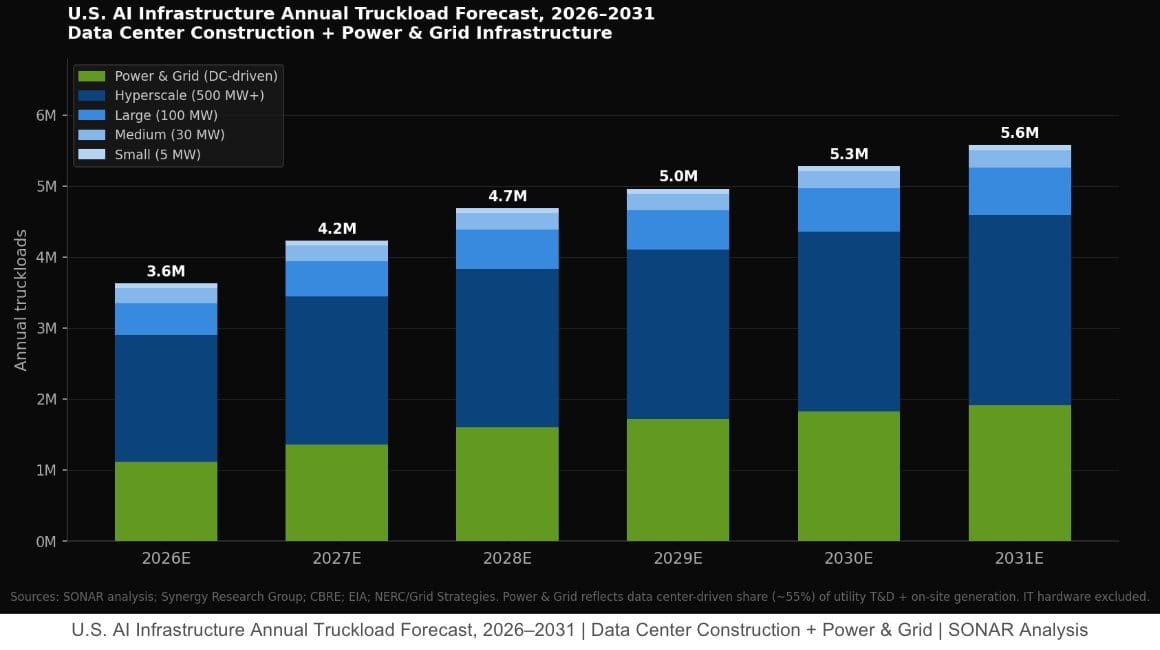
The artificial intelligence boom is rapidly exhausting the supply of computing power that AI developers depend on, triggering outages, product cancellations and sharp price increases across the industry. Anthropic has experienced frequent service disruptions and imposed token usage limits on customers, while OpenAI scrapped its Sora video app to free up compute capacity. Cloud provider CoreWeave has raised prices more than 20% and extended customer contract terms, and spot-market rental rates for Nvidia GPUs have climbed 48% in the past two months. Demand has surged in particular for agentic AI tools that autonomously perform multi-step tasks, dramatically increasing per-user compute consumption. The crunch echoes earlier infrastructure-driven booms, from 19th-century railroads to the early-2000s telecom buildout, in which demand outpaced the industry's ability to construct capacity. Industry analysts estimate AI data center construction and related power infrastructure projects will generate 3.6 million truckloads in 2026, ramping to 5.6 million by 2031, reflecting the scale of steel, concrete, copper and cooling-system inputs required for hyperscale facilities.
WSJ / FreightWaves
APRIL 13 1970: APOLLO 13 OXYGEN TANK EXPLODES
An oxygen tank on the Apollo 13 spacecraft exploded about 200,000 miles from Earth, crippling the mission and forcing NASA to abort its planned lunar landing. Astronauts James Lovell, John Swigert, and Fred Haise instead focused on survival as mission control devised emergency procedures that helped them safely return to Earth four days later.
Found a mistake? Have a news tip or feedback to share? Contact our newsroom using the button below:
citizen journal offers three flagship products: a daily national news summary, a daily Kansas news summary, and local news and school board summaries from 34 cities across 5 states. Use the links in the header to navigate to national, kansas, and local coverage. Subscribe to each, some, or all to get an email when new issues are published for FREE!
Brought to you by (click me!)
Sources
- Washington Post / WSJ / NYT
- WSJ / CSIS / Politico
- WSJ
- WSJ
- WSJ / FreightWaves
