Top 5 US news stories
March 17 2026

Retired Admiral Outlines Plan to Secure Strait of Hormuz
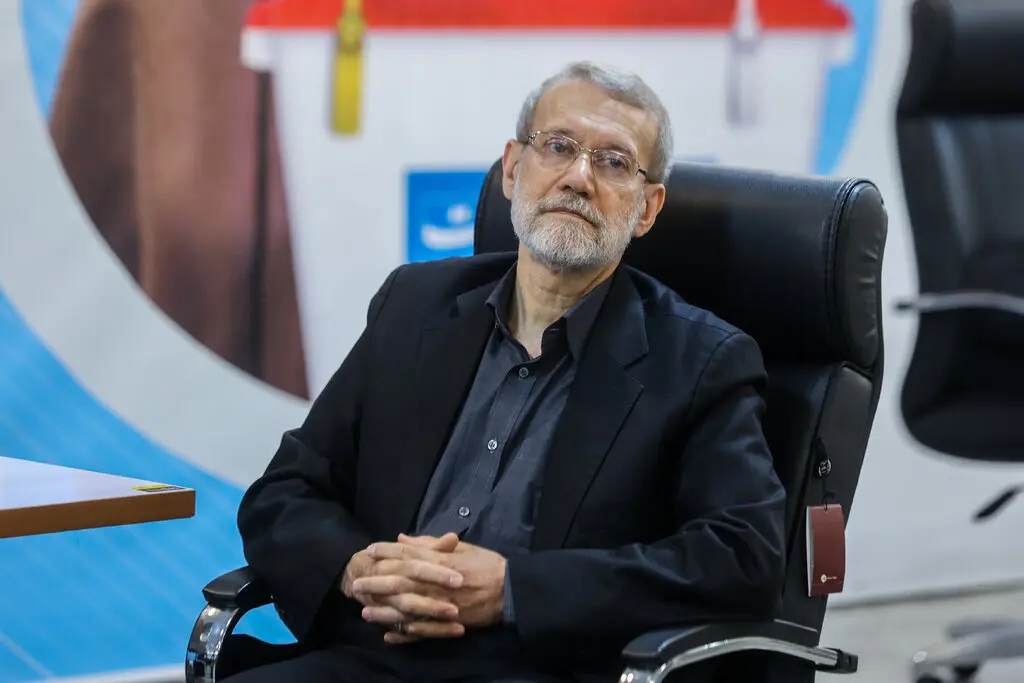
Iran Cracks Down on Dissent as Israel Kills Security Chief Larijani
Iran's Security Forces Show Cracks as Pay Delays, Desertions Spread
Driverless Semi Trucks Near Commercial Reality With 2027 Target
Trump Says He May "Free" or "Take" Cuba as Island Faces Blackout
Retired Admiral Outlines Plan to Secure Strait of Hormuz
Retired Rear Adm. Mark Montgomery, a former carrier strike group commander, has laid out a multi-layered plan to keep the Strait of Hormuz open to tanker traffic amid the U.S.-Israel campaign against Iran. The plan calls for degrading Iranian missile, mine, drone and unmanned boat threats to a "militarily manageable risk," maintaining continuous surveillance 50 miles on each side of the strait and 100 miles back, and keeping four to eight aircraft overhead during convoy operations armed with the Advanced Precision Kill Weapon System, a $25,000 rocket effective against Shahed drones. Armed helicopters would counter small-boat attacks, and 10 to 14 Aegis destroyers would serve as escort ships, with allied participation possible once the force is in place. Israel would use the window to continue its broader campaign, which President Trump has said was planned for four to six weeks; Trump's suggestion Sunday that he may delay a March 31 trip to China signals he is not imposing arbitrary deadlines on the operation. In the longer term, Gulf states are expected to pursue pipeline alternatives to bypass the Hormuz chokepoint, a cost Iran will share with the neighbors it is now attacking.
Wall Street Journal
Iran Cracks Down on Dissent as Israel Kills Security Chief Larijani
Iran's government has launched a new wave of repression against domestic dissent, led until this week by security chief Ali Larijani, who the U.S. government says played a central role in the killings of antiregime demonstrators in January and who had emerged as the central figure directing Iran's military response to the U.S.-Israeli campaign. Israel killed Larijani in airstrikes Monday night, according to Israel's defense minister. The crackdown he orchestrated continues: security forces are arresting people suspected of ties to foreign entities and threatening would-be protesters with death, even as U.S. and Israeli strikes have shattered command posts of Iran's police, the Islamic Revolutionary Guard Corps and the Basij militia. On the streets, residents say armed plainclothes men on motorcycles patrol cities at night brandishing weapons, while security checkpoints around Tehran routinely stop and search vehicles.
Wall Street Journal
Iran's Security Forces Show Cracks as Pay Delays, Desertions Spread
Signs of low morale, financial strain and desertion are spreading among Iran's security and military forces, according to Iran International. Members of the Special Units Command received notice Friday that salary payments for some units had run into problems, marking the third pay delay this year, and retirees and some army personnel have gone unpaid for a second straight month. Following the delays, some personnel refused to attend pro-government gatherings, causing disruptions in deployment in several major cities. Iran International reports that at least 5,000 members of Iran's military and security forces have been killed and more than 15,000 wounded in the U.S.-Israeli campaign, with the Revolutionary Guards, Basij forces and anti-riot police sustaining the heaviest casualties, though no official casualty figures have been released. Desertions within the police have emerged as a serious challenge for authorities; unverified reports indicate about 350 personnel left their posts at one base, and in some units the rate of absence or desertion has reportedly approached 90 percent.
Iran International
Driverless Semi Trucks Near Commercial Reality With 2027 Target
A consensus is forming that fully autonomous semi trucks will begin regular interstate runs in 2027, with multiple companies preparing to roll out fleets in Texas starting later this year. The shift would reshape a U.S. freight-truck industry that generates more than $900 billion in annual revenue, since driver pay accounts for 26 to 40 percent of per-mile operating costs depending on the estimate. An acute driver shortage, long cited as a motivation for autonomy, is no longer a major U.S. factor; the American Trucking Associations' chief economist, Bob Costello, said demand has fallen enough that no big domestic shortage exists, though a global shortfall of 3.6 million drivers was reported last year. The arrival of driverless long-haul trucking on major highways marks a turning point for the industry, even as questions remain about regulation, liability and the labor force effects of eliminating the cab.
NYT
Trump Says He May "Free" or "Take" Cuba as Island Faces Blackout
President Trump told reporters at the White House on Monday that he believes he will have "the honor of taking Cuba," saying "whether I free it, take it — I think I can do anything I want with it," and adding that the island is "a very weakened nation right now." His remarks came the same day Cuba suffered a nationwide blackout amid dwindling fuel supplies. Also on Monday, Cuban Deputy Prime Minister Oscar Pérez-Oliva Fraga announced that the Communist government would open itself to foreign investment, including from the United States and from Cubans living abroad and their descendants. Behind the scenes, the Trump administration is pushing for the removal of President Miguel Díaz-Canel as part of ongoing U.S.-Cuba negotiations, according to four people familiar with the talks, though Washington is not seeking action against Castro family members who remain the country's top power brokers. The approach reflects the administration's broader preference for forcing regime compliance rather than regime change in its foreign policy.
NYT
March 17 1958: Vanguard I becomes first solar-powered satellite in orbit
Launched by the U.S. Naval Research Laboratory, Vanguard I was a small aluminum sphere about the size of a cantaloupe placed into Earth orbit. As the first satellite to use solar cells for power and now the longest‑lasting human-made object in space, it proved the durability of solar technology in orbit and provided critical early data on Earth’s shape and atmosphere, influencing both space science and later satellite design.
Found a mistake? Have a news tip or feedback to share? Contact our newsroom using the button below:
citizen journal offers three flagship products: a daily national news summary, a daily Kansas news summary, and local news and school board summaries from 34 cities across 5 states. Use the links in the header to navigate to national, kansas, and local coverage. Subscribe to each, some, or all to get an email when new issues are published for FREE!
Brought to you by (click me!)
Sources
- Wall Street Journal
- Wall Street Journal / Wall Street Journal
- Iran International
- New York Times
- New York Times / New York Times
