Top 5 US news stories
March 2 2026

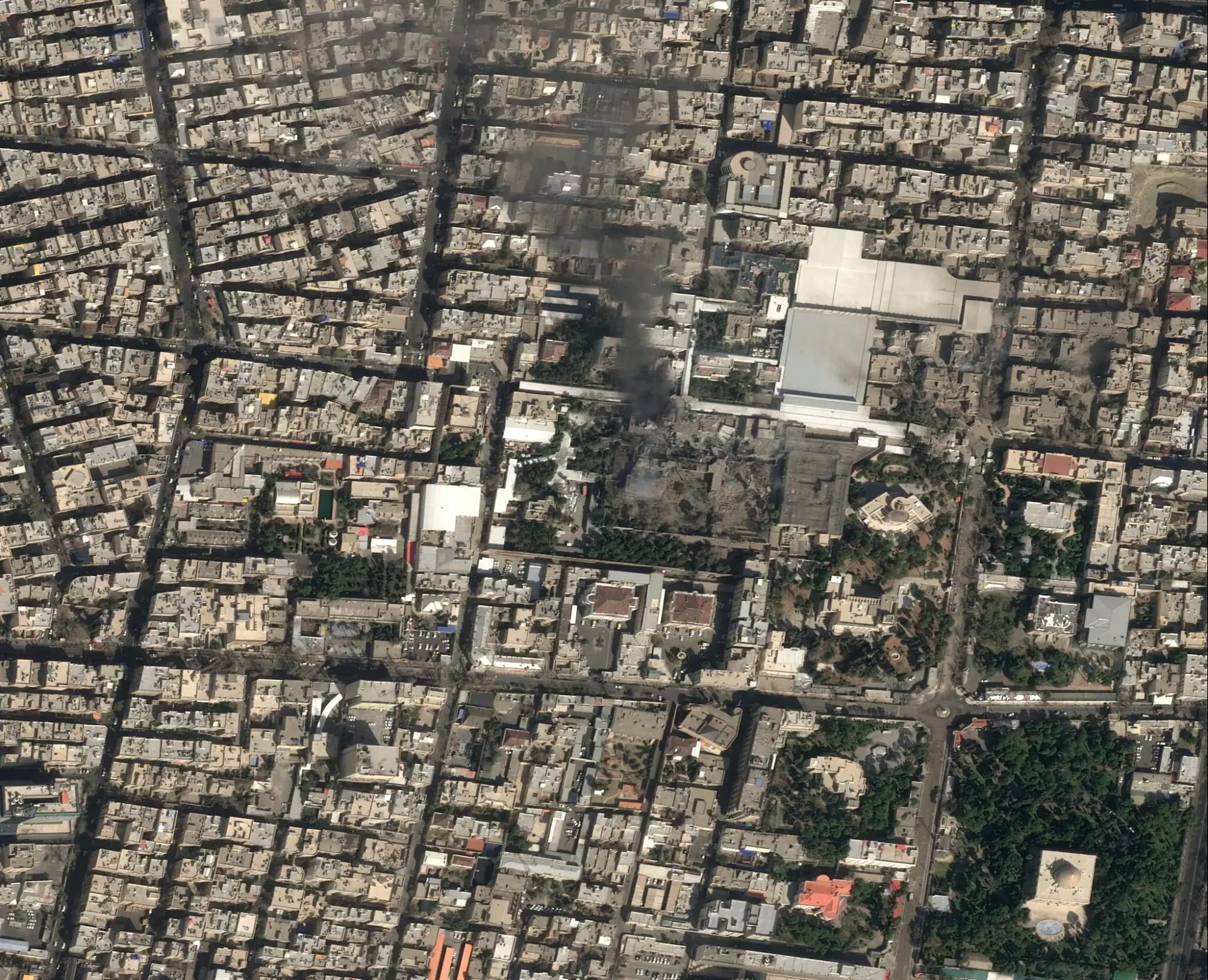
U.S.-Israeli Strikes Kill Khamenei, Decapitate Iran's Military Leadership
First U.S. Deaths Deepen Democratic Rift as Texas Shooting Raises Terror Fears
Iran's Would-Be Successors Killed Before Taking Power
Iranian Drones Hit World's Largest Oil Terminal, Rattle Global Markets
Pentagon Drops Anthropic, Hands Classified AI Contract to Rival OpenAI
U.S.-Israeli Strikes Kill Khamenei, Decapitate Iran's Military Leadership
The United States and Israel launched a devastating three-wave assault on Iran on Saturday after the C.I.A. spent months tracking the movements of Supreme Leader Ayatollah Ali Khamenei and pinpointed a high-level meeting of top Iranian officials at a leadership compound in central Tehran. Despite having drawn what were described as painful lessons from a 12-day war with Israel in June — when Israeli intelligence tracked Iranian commanders through their bodyguards' cellphones — Iran's highest military and intelligence officials gathered in broad daylight, above ground, at the country's National Security Council offices on Saturday morning, just as much of the world expected an American or Israeli attack. The C.I.A. learned that Khamenei himself would be present at the site and the two allies adjusted their attack timing to exploit the intelligence window, according to officials with knowledge of the decisions. The strikes at 9:40 a.m. local time eliminated top Iranian officials and killed the supreme leader at his official residential compound, crossing what Israeli officials described as a new Rubicon — the killing of a sovereign nation's head of state, something Israel had declined to do during the June war. After decimating the Iranian high command, the coalition launched a furious search-and-destroy mission against Iran's ballistic missile systems, including munitions, launchers, crews, storehouses and production sites. By midday Sunday, Israeli military officials said air supremacy over Iran had been achieved and that Israeli jets were flying freely over Tehran.
NYT
First U.S. Deaths Deepen Democratic Rift as Texas Shooting Raises Terror Fears
Three U.S. servicemembers were killed and five seriously wounded in the opening phase of what President Trump said would be a four-week military operation against Iran, as more than 500 Iranians were killed by U.S. and Israeli strikes according to the Red Crescent, Lebanon reported 31 people killed by Israeli strikes, and several deaths were reported from Iranian attacks in the region including in Israel and the U.A.E. In a separate incident, three U.S. F-15 jet fighters were mistakenly shot down over Kuwait by friendly forces, though all six crew members safely ejected and are in stable condition, according to U.S. Central Command. Trump warned that more American casualties are likely.
The strikes have fueled sharp partisan divisions in Washington, with Democrats overwhelmingly opposing the president's decision to strike Iran without congressional approval, though a small handful of the party's strongest supporters of Israel have backed the operation. The first American casualties deepened questions within the party over whether the strikes were justified, even as tensions emerged over how stridently to oppose the use of force to achieve regime change and limit Iran's nuclear capabilities. Separately, a gunman wearing clothes bearing an Iranian flag design and the words "Property of Allah" killed two people and wounded 14 before being fatally shot by police at an Austin, Texas, bar early Sunday, with the FBI investigating the shooting as a potential act of terrorism. Rep. Mike Lawler, Republican of New York, called on Democratic leaders to immediately drop opposition to Department of Homeland Security funding in light of the threat from Iran and its proxies.
WSJ, NYT, AP, X (Lawler)
Iran's Would-Be Successors Killed Before Taking Power
President Trump told ABC News that the U.S. had identified possible candidates to assume leadership of Iran, but they were killed in the initial attack. "The attack was so successful it knocked out most of the candidates," Trump said. "It's not going to be anybody that we were thinking of because they are all dead. Second or third place is dead." Following the killing of Supreme Leader Khamenei on February 28, Iran quickly formed a three-member interim leadership council under Article 111 of its constitution on March 1, comprising President Masoud Pezeshkian, Chief Justice Gholamhossein Mohseni Ejei, and senior cleric Ayatollah Alireza Arafi. Shortly after his appointment, an account on X attributed to Arafi posted a defiant message threatening that "tonight, the world will witness the end of the Zionist's arrogance" amid escalating strikes. Unverified reports from social media and some Israeli sources claim Arafi was killed in a subsequent airstrike or drone attack just hours later on March 1, further deepening Iran's leadership crisis during the conflict.
ABC News (Jonathan Karl / X), compiled reports
Iranian Drones Hit World's Largest Oil Terminal, Rattle Global Markets
Oil prices surged and global stock markets slumped after U.S. and Israeli strikes on Iran showed signs of sparking a widening conflict across the Middle East. Futures for Brent crude oil, the global energy benchmark, rose over 7 percent, fueled by fears of a protracted closure of the Strait of Hormuz corridor and attacks on Middle Eastern energy infrastructure, though gains were more muted than some analysts expected. Early Monday, Iranian drones struck Saudi Aramco's Ras Tanura facility, the single largest oil export terminal on the planet, which handles roughly 6.5 million barrels per day — nearly 7 percent of global oil supply — dramatically escalating the threat to energy markets and raising the prospect of sustained disruption to worldwide petroleum flows.
WSJ, X (DD Geopolitics)
Pentagon Drops Anthropic, Hands Classified AI Contract to Rival OpenAI
The federal government designated artificial intelligence company Anthropic a supply-chain risk and ordered all federal agencies to immediately cease using its technology after weeks of negotiations over a $200 million Pentagon AI contract collapsed at a Friday evening deadline. The talks broke down over Anthropic's refusal to allow its technology to be used for purposes such as fully autonomous weapons or the surveillance of Americans. Emil Michael, the Defense Department's chief technology officer and former top Uber executive, had been simultaneously negotiating a parallel deal with rival OpenAI, and when the deadline passed without agreement, Defense Secretary Pete Hegseth announced Anthropic's designation as a security risk. "America's warfighters will never be held hostage by the ideological whims of Big Tech," Hegseth posted on social media. President Trump directed every federal agency to cease all use of Anthropic's technology, saying the nation would "never allow a radical-left, woke company to dictate how our great military fights and wins wars."
Hours later, OpenAI chief executive Sam Altman announced his company had reached an agreement with the Pentagon to provide AI technologies for classified systems, joining Elon Musk's xAI, which had recently secured similar approval. The clash underscored a widening divide between Anthropic, one of the only major AI companies to resist the Trump administration's demands, and competitors that have supported the president's tech policies. Anthropic's Claude chatbot surged to the No. 1 spot in U.S. app downloads on Saturday, overtaking OpenAI's ChatGPT, as some social media users called for abandoning ChatGPT over OpenAI's Pentagon deal. The long-term business impact for Anthropic remains unclear, but the episode has raised fundamental questions about whether the federal government or private companies should control the boundaries of AI use in national security.
WSJ, NYT, Axios
March 2 1836: Texas declares independence
The Texas Declaration of Independence was issued, during the Texas Revolution, as American settlers in Texas broke away from Mexico while Santa Anna’s army was besieging the Alamo. They were reacting to what they saw as the dictatorship of Santa Anna, limits on immigration from the U.S., and especially Mexico’s ban on slavery, which the new Texan constitution explicitly protected. For the public today, this moment matters because it shows how disputes over governance, rights and slavery shaped not just Texas, but the expansion of the United States and the coming conflicts over slavery nationwide.
Found a mistake? Have a news tip or feedback to share? Contact our newsroom using the button below:
citizen journal offers three flagship products: a daily national news summary, a daily Kansas news summary, and local news and school board summaries from 34 cities across 5 states. Use the links in the header to navigate to national, kansas, and local coverage. Subscribe to each, some, or all to get an email when new issues are published for FREE!
Brought to you by (click me!)
Sources
- NYT — How Iran's Fatal Security Mistakes Enabled the Deadly U.S.-Israeli Strikes
- NYT — C.I.A. Zeroed In on Khamenei's Location Before the Attack
- NYT — Iran Leadership Killed: Khamenei, Shamkhani, Pakpour, Nasirzadeh
- NYT — Israel Tracked Iranian Leaders via Bodyguards' Cellphones
- WSJ — Iran-Israel-U.S. Strikes Live Coverage
- WSJ — Three U.S. Jet Fighters Mistakenly Shot Down Over Kuwait
- NYT — Trump Iran Attack Deepens Democratic Divisions
- AP — Austin Texas Bar Shooting
- X — Rep. Mike Lawler on DHS Funding
- X — Jonathan Karl / ABC News on Trump Interview
- WSJ — Stock Market and Oil Prices Live Coverage
- X — DD Geopolitics on Ras Tanura Strike
- WSJ — Trump Will End Government Use of Anthropic's AI Models
- NYT — Inside the Anthropic-Pentagon-OpenAI Talks
- Axios — Anthropic's Claude Overtakes ChatGPT in App Downloads
