Top 5 US news stories
February 23 2026
Supreme Court Strikes Down Trump's Sweeping Tariffs in 6-3 Ruling
Trump Raises Global Tariff to 15% Under New Legal Authority After Supreme Court Defeat
U.S. Green Berets Retrain for Arctic Warfare as NATO Shifts Focus Northward
OpenAI Weighed Alerting Police About Canada Mass Shooting Suspect Months Before Attack
Mexican Forces Kill Top Drug Kingpin 'Mencho,' Sparking Cartel Rampage
Supreme Court Rejects Trump's Emergency Tariff Powers, Dealing Major Blow to Trade Agenda
The Supreme Court ruled 6-3 on Friday that President Trump exceeded his authority in imposing sweeping tariffs on imports from nearly every U.S. trading partner, finding that the International Emergency Economic Powers Act does not authorize the president to unilaterally impose duties without congressional approval. Chief Justice John G. Roberts Jr., writing for the majority, said the president must identify clear congressional authorization to exercise such extraordinary power, while Justices Clarence Thomas, Samuel A. Alito Jr. and Brett M. Kavanaugh dissented. The decision carries significant implications for the U.S. economy and trade policy, with the administration warning that a loss could force the government to unwind trade deals and potentially pay hefty refunds to importers.
NYT
Trump Invokes Alternate Legal Authority to Impose 15% Global Tariff After Supreme Court Strikes Down Original Duties
President Trump moved swiftly to replace tariffs struck down by the Supreme Court, announcing Saturday he would raise a new global tariff to 15% from 10%, effective immediately, invoking Section 122 of the Trade Act of 1974 — a provision that permits tariffs of up to 15% for 150 days — after the court on Friday rejected the administration's argument that the International Emergency Economic Powers Act implicitly authorized his earlier duties. U.S. Trade Representative Jamieson Greer said Sunday the administration had found ways to "reconstruct" the tariffs and described the new levies as "very durable" legally, while the president indicated the 150-day tariffs would be followed by longer-lasting duties under Section 301 of the Trade Act, which requires monthslong investigations before tariffs can be imposed.
WSJ, NYT
War-on-Terror Veterans Face Brutal Arctic Conditions as U.S. Special Forces Retrain for Cold-Weather Combat
A dozen U.S. Army Green Berets, veterans of combat in the deserts and jungles of the Middle East and Asia, are retraining for Arctic warfare in northern Sweden near the Arctic Circle, where temperatures hover around minus-30 degrees Fahrenheit and the extreme cold has proved as formidable as any human adversary. During the three-week NATO winter warfare course in Kalix, Sweden, one team member was dismissed with a severe cold injury to his finger, and a European soldier from another team was hospitalized and risked losing parts of two toes — an incident instructors attributed to a failure to change out of sweaty socks — as nearly 100 soldiers from NATO allies participated in the grueling training.
WSJ
OpenAI Banned Account but Declined to Alert Police About Canada Mass Shooting Suspect Despite Internal Alarms
Months before Jesse Van Rootselaar became the suspect in a mass shooting that devastated a rural British Columbia town, OpenAI employees flagged and internally debated her ChatGPT interactions describing gun-violence scenarios over several days last June, with about a dozen staffers weighing whether to alert Canadian law enforcement after some interpreted the posts as an indication of potential real-world violence. OpenAI leaders ultimately decided the activity did not meet the company's criteria for reporting — which requires a credible and imminent risk of serious physical harm — and instead banned Van Rootselaar's account, a company spokeswoman said. The case has also drawn broader media debate, with some critics arguing that reporting on mass shootings systematically omits relevant biographical details about suspects, that Rootselaar is a trans woman, while others contend such details are immaterial to the events.
WSJ
Mexican Military Kills Jalisco Cartel Boss 'Mencho' Oseguera, Triggering Violent Gang Reprisals
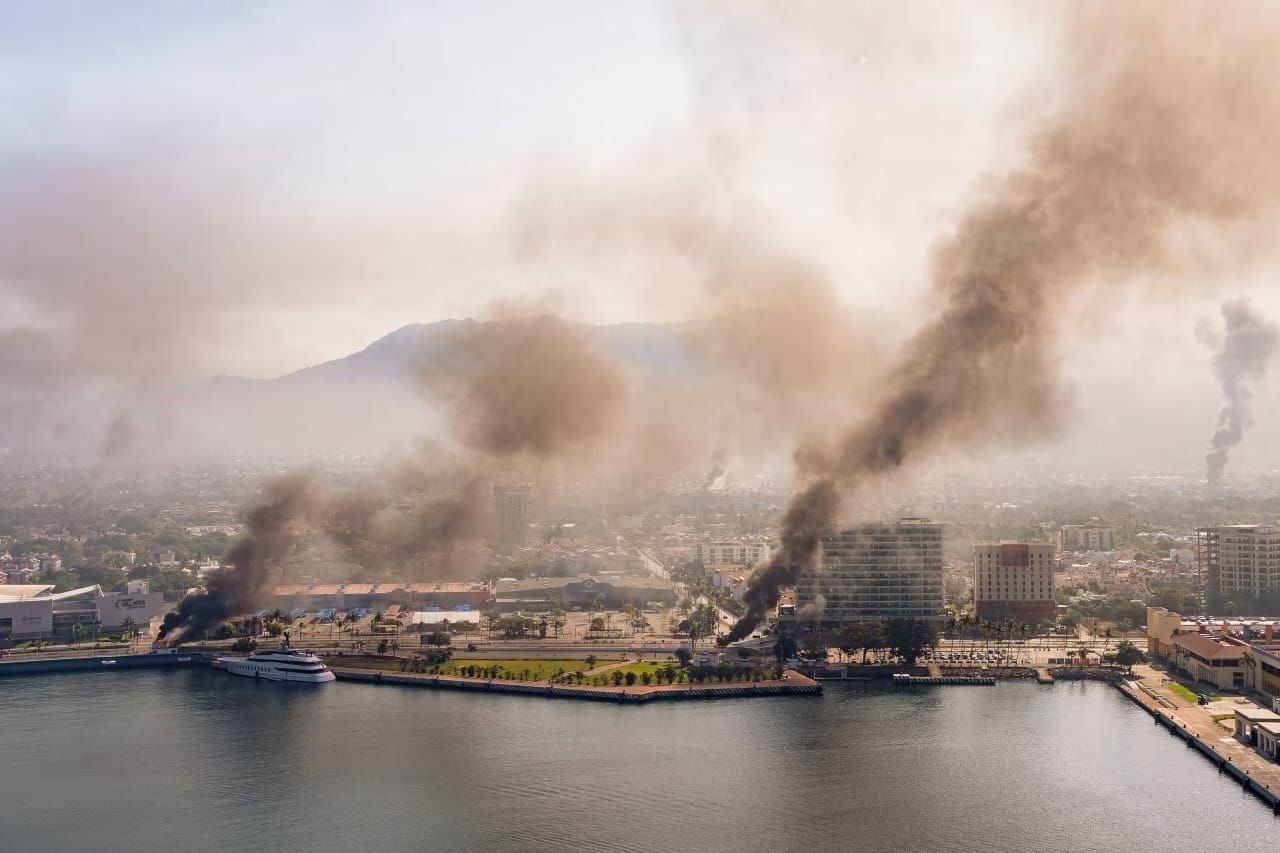
Mexico's special forces killed Nemesio "Mencho" Oseguera, the leader of the Jalisco New Generation Cartel and the country's most powerful drug kingpin, in a planned operation in the rural municipality of Tapalpa with supplementary intelligence from U.S. authorities, marking the most significant strike yet in Mexico's cartel crackdown under President Claudia Sheinbaum, who has faced sustained pressure from President Trump to curb narcotics trafficking. The killing triggered an immediate and violent response, with cartel gunmen launching a rampage across the region including in the Pacific beach resort of Puerto Vallarta, shattering a quiet Sunday morning with gunfire and chaos as the cartel — known for conspicuous violence — moved to send a message in one of Jalisco state's wealthiest destinations, home to thousands of American retirees.
WSJ
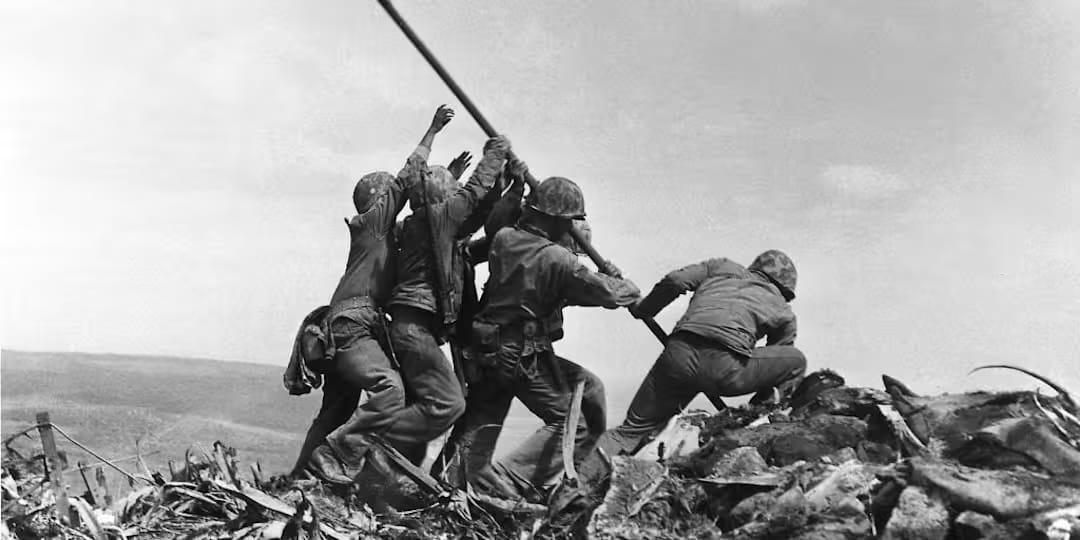
February 23 1945: U.S. flag raised on Iwo Jima
Found a mistake? Have a news tip or feedback to share? Contact our newsroom using the button below:
citizen journal offers three flagship products: a daily national news summary, a daily Kansas news summary, and local news and school board summaries from 34 cities across 5 states. Use the links in the header to navigate to national, kansas, and local coverage. Subscribe to each, some, or all to get an email when new issues are published for FREE!
Brought to you by (click me!)
Sources
- NYT — Supreme Court Tariffs Ruling
- WSJ — Trump Increases Global Tariff to 15%
- NYT — Trump Administration Tariff Response
- WSJ — U.S. Elite Troops Retrain for Arctic Combat
- WSJ — OpenAI Employees Raised Alarms About Canada Shooting Suspect
- WSJ — Mexican Forces Kill Drug Kingpin Oseguera
- WSJ — Gunmen Wreak Chaos After Cartel Killing
