Top 5 US news stories
January 27 2026

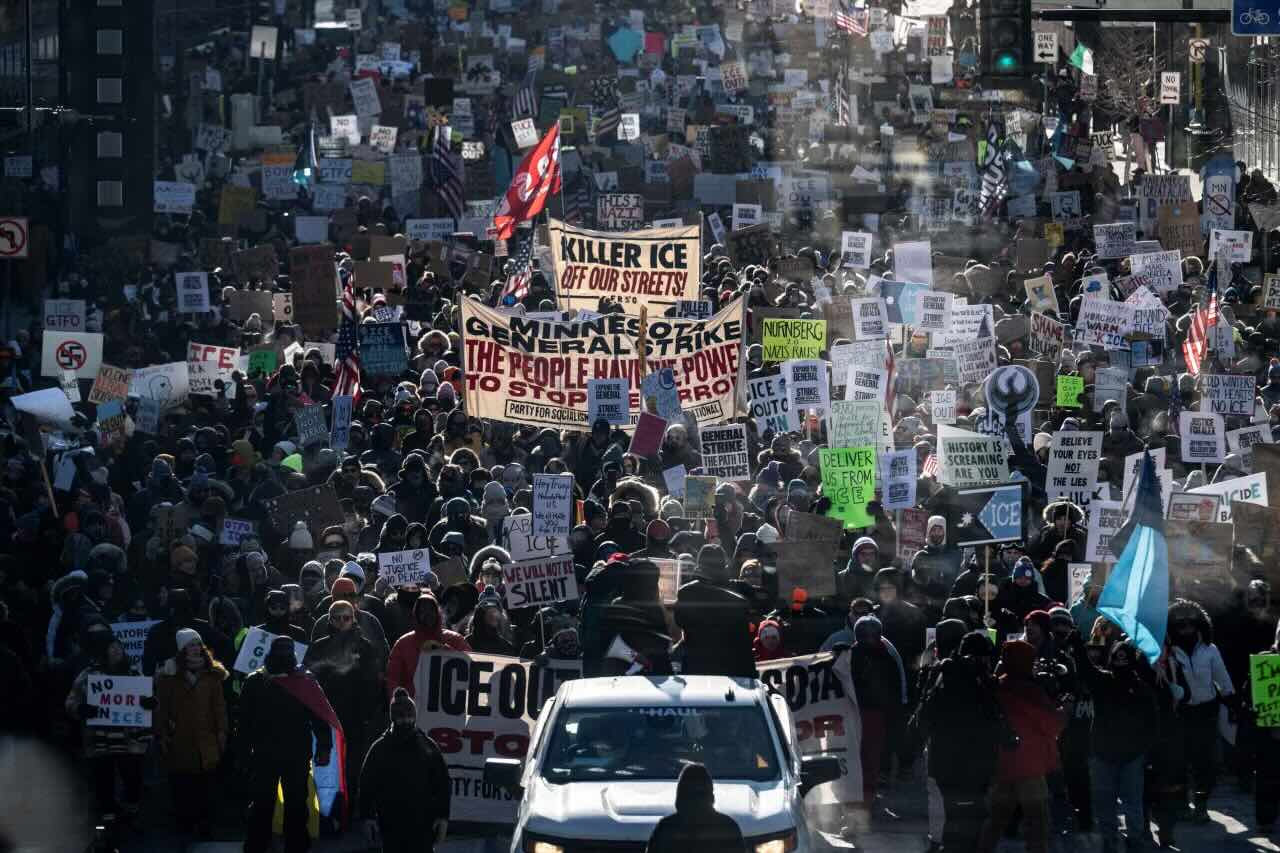
Federal Agents Begin Withdrawing from Minnesota After Fatal Shooting Sparks De-escalation Talks
Minnesota Shooting Derails Funding Deal, Pushing Government Toward Partial Shutdown
Trump Administration Proposes Flat Medicare Rates, Sending Insurer Stocks Plunging
Social Media Giants Face Big Tobacco-Style Addiction Trial as Plaintiffs Deploy Century-Old Legal Playbook
Iran's Protest Crackdown Death Toll May Exceed 10,000 as USS Lincoln Arrives in Middle East
Federal Agents Begin Withdrawing from Minnesota After Fatal Shooting Sparks De-escalation Talks
Border Patrol Commander Gregory Bovino is set to depart Minnesota along with some agents as President Trump dispatches border czar Tom Homan to the state, signaling a shift in immigration enforcement strategy following the fatal shooting of Alex Pretti. Trump held conversations Monday with Minnesota Gov. Tim Walz and Minneapolis Mayor Jacob Frey, with the White House announcing a reduction in federal agents contingent on increased cooperation from local officials. Frey confirmed some agents will begin leaving Tuesday and said the current situation cannot continue. The developments follow Pretti's Saturday death—the second killing of a U.S. citizen by federal immigration authorities in Minneapolis within two weeks. Pretti, a 37-year-old intensive-care nurse, was confronted while filming ICE officers' activities, wrestled to the ground, and fatally shot.
WSJ
Minnesota Shooting Derails Funding Deal, Pushing Government Toward Partial Shutdown
Democrats are demanding Republicans strip Department of Homeland Security funding from a massive appropriations package following the fatal shooting of Alex Pretti by federal agents, threatening a partial government shutdown set to begin Saturday at 12:01 a.m. The video-recorded killing of the 37-year-old Minnesota man has complicated Senate plans to approve a six-bill spending package this week, sparking public unease even among Trump allies in Congress. Democrats believe they have leverage as Americans recoil at the administration's aggressive immigration enforcement tactics, while Republicans are proposing alternatives including executive actions or separate legislation to avoid changes to the sprawling bill. Senate Minority Leader Chuck Schumer placed responsibility for preventing the shutdown on Majority Leader John Thune and Senate Republicans, calling for them to strip and renegotiate the DHS bill while allowing the remainder of the package—covering nearly three-quarters of annual agency spending—to pass into law. Any changes would require House action, but the chamber is out until Monday, one day after the shutdown deadline.
Politico
Trump Administration Proposes Flat Medicare Rates, Sending Insurer Stocks Plunging
The Trump administration proposed a near-flat 0.09% average payment increase for Medicare insurers in 2027, falling well short of Wall Street expectations and triggering sharp stock declines across the sector. The Centers for Medicare and Medicaid Services announced the rates Monday, also proposing to eliminate a lucrative industry billing practice that has drawn scrutiny from government watchdogs. Shares of major Medicare insurers tumbled in after-hours trading, with UnitedHealth Group—the largest Medicare insurer by membership—dropping more than 9%, Humana falling 12%, and CVS Health declining over 9%. The proposed rate update and billing practice elimination represent significant regulatory changes that could substantially impact the Medicare insurance industry's profitability.
WSJ
Social Media Giants Face Big Tobacco-Style Addiction Trial as Plaintiffs Deploy Century-Old Legal Playbook
Meta, Snap, TikTok and YouTube will confront claims mirroring those leveled against cigarette manufacturers, with attorneys deploying the same legal strategies used to win massive damages from Big Tobacco last century in landmark trials beginning this year. Jury selection starts Tuesday in California Superior Court of Los Angeles County for the first bellwether case, where a now-20-year-old Californian identified as K.G.M. alleges she became addicted to social media sites as a child, experiencing anxiety, depression and body-image issues. Thousands of lawsuits from teenagers, school districts and states accuse the platforms—like tobacco companies before them—of knowingly designing addictive products that encouraged excessive use among millions of young Americans, leading to personal injury and other harms. The cases pose one of the most significant legal threats to the social media titans, potentially opening them to the same liabilities that devastated Big Tobacco. A plaintiff victory could trigger the same cascade effect seen with cigarette litigation: millions more lawsuits, massive monetary damages comparable to tobacco settlements, and mandatory changes to product designs.
NYT
Iran's Protest Crackdown Death Toll May Exceed 10,000 as USS Lincoln Arrives in Middle East
Human rights groups investigating Iran's violent suppression of antigovernment protests now project the death toll could surpass 10,000, with some estimates reaching as high as 36,000, far exceeding initial estimates of a few thousand deaths after the regime shut off internet access and blocked communications during the crackdown. Reviewing witness accounts, field investigations, hospital records, videos and photos, activists say the reality appears far worse than originally documented, making it one of the most violent state deployments against protesters and exceeding China's 1989 Tiananmen Square toll. Meanwhile, the aircraft carrier USS Abraham Lincoln and accompanying warships entered the Middle East, giving President Trump additional offensive and defensive capabilities as he weighs potential military action against Iran. The deployment marks a significant buildup of combat power in the region, with air-defense systems and jet fighter squadrons streaming back after the Pentagon moved hardware out last year to focus on Venezuela.
Iran International / WSJ

January 27 1785: Georgia incorporates the first state university, University of Georgia
Public universities in America grew from a handful of late‑18th‑century state schools into a nationwide system that expanded rapidly after the Civil War. The biggest surge came with the Morrill Land‑Grant Acts of 1862 and 1890 and then again after World War II, when the GI Bill and later federal aid massively increased enrollment and led many states to build large public university systems. Most modern public universities — especially the big state “flagships” and regional campuses people think of today — were founded or greatly expanded in the late 19th and especially the 20th century, with major growth waves from roughly the 1860s–1910s and then the 1940s–1970s.
Found a mistake? Have a news tip or feedback to share? Contact our newsroom using the button below:
citizen journal offers three flagship products: a daily national news summary, a daily Kansas news summary, and local news and school board summaries from 34 cities across 5 states. Use the links in the header to navigate to national, kansas, and local coverage. Subscribe to each, some, or all to get an email when new issues are published for FREE!
Brought to you by (click me!)
Sources
- Wall Street Journal
- Politico
- Wall Street Journal
- New York Times
- Wall Street Journal / Iran International / Wall Street Journal
