Manhattan daily brief
Manhattan, Kansas and US news for busy people - Apr 7, 2026 edition


Manhattan
- Emergency officials declared a local disaster after high winds fueled eight concurrent wildfires in a single afternoon, stretching resources thin and halting all controlled burning. →
- The fire department must replace several specialized ladders that failed stress tests and is looking to sell a retired fire engine to offset costs. →
- Riley County officials are monitoring a major property tax bill in Topeka that is expected to be vetoed by the governor, which would impact future tax evaluations. →
- Major crimes in the county dropped 3.1% overall, though violent offenses including aggravated assault and robbery increased by 5.3%. →
- Corrections officials warn the jail has reached a 'crisis moment' with an aging facility and high population forcing the county to house inmates elsewhere at a high cost. →
- The percentage of inmates held on felony charges has risen to 54% from 41% a decade ago, leading to longer stays and increased pressure on jail capacity. →
- The Board of Riley County Commissioners is returning to its renovated downtown facility for meetings starting this week. →
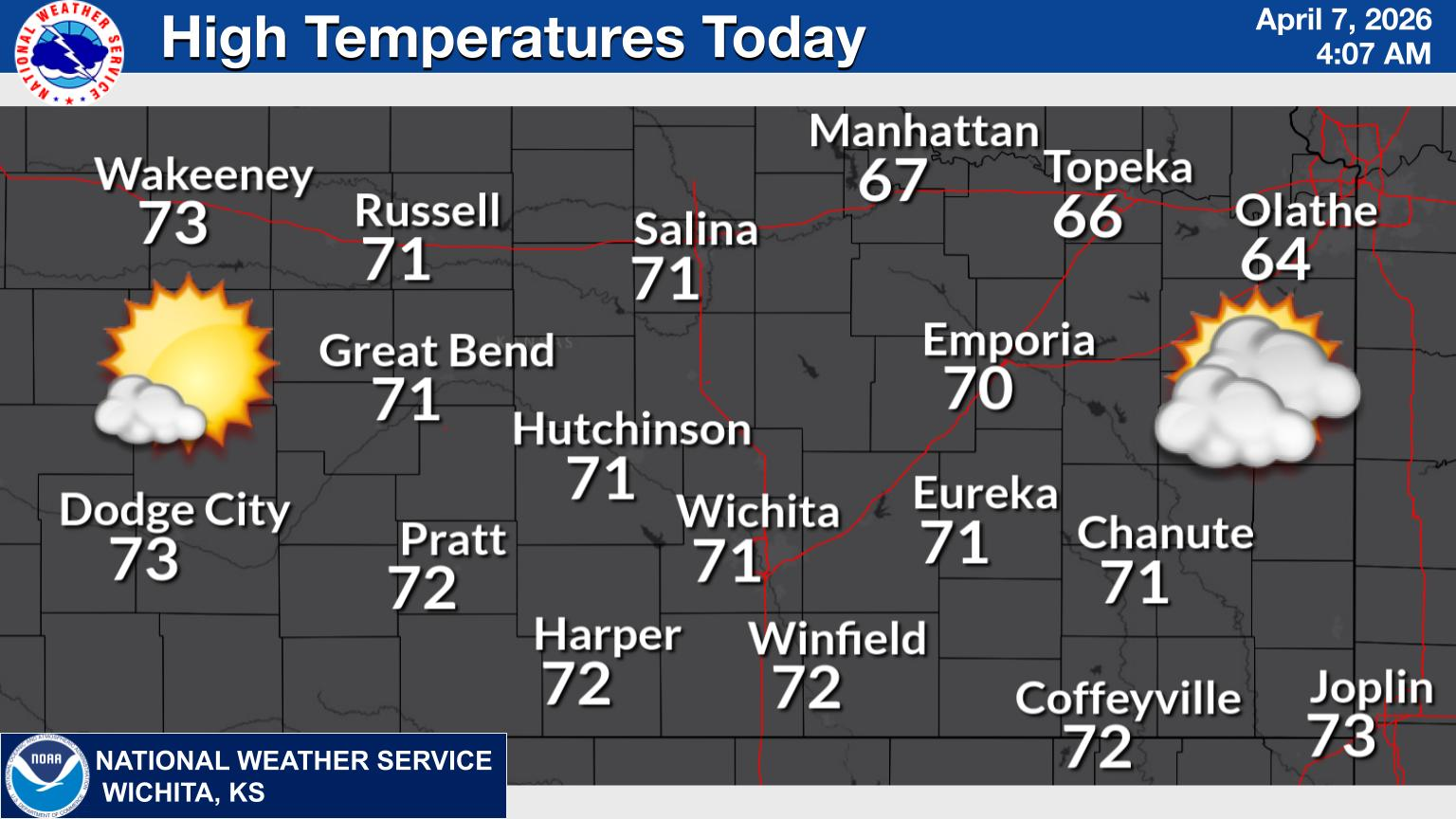
- Expect a beautiful, partly sunny day with a high of 67, though it will be a bit breezy with southeast gusts reaching 25 mph.
🌾 Kansas
-
Gov. Laura Kelly vetoed eight bills Monday sent by the Republican-led Legislature, including measures on immigration, private school tax credits and abortion, setting up potential override fights during the veto session scheduled for Thursday and Friday. →
-
Gov. Laura Kelly signed 12 bipartisan bills into law Monday, including measures authorizing up to $10,000 bonuses to retain critical state workers and creating new legal avenues to remove squatters from residential properties. →
-
Gov. Laura Kelly signed a bipartisan bill creating the Attorney Training Program for Rural Kansas Act, offering law students annual stipends of $3,000 and licensed attorneys up to $20,000 annually in loan repayment to address attorney shortages in less-populated counties. →
-
Gov. Laura Kelly signed House Bill 2537, known as Caleb's Law, enhancing criminal penalties for online sexual extortion and expanding the state's legal framework to address digital threats against children. →
-
NASA Administrator Jared Isaacman visited the Kansas Cosmosphere on Monday as the Artemis II crew orbited the far side of the moon, cutting the ribbon on a renovated Hall of Space Museum and touring aerospace manufacturers in Wichita. →
🇺🇸 US
-
A new Goldman Sachs report finds workers displaced by technological shifts take a month longer to find jobs and earn 3% less after reemployment, as the share of Americans over 55 in the workforce falls to 37.2%, the lowest level in more than 20 years. →
-
Maine is poised to become the first state to freeze construction of new data centers this spring as lawmakers in more than 10 states propose temporary bans amid a building boom driven by AI demand. →
-
Americans spend more on healthcare than anyone else in the world, with family insurance premiums now approaching $27,000 a year, as the Trump administration announces it will raise payments to Medicare Advantage insurers by 2.48% for 2027. →
-
Four astronauts aboard NASA's Artemis II mission swung around the far side of the moon Monday, becoming the first humans in more than half a century to slip behind the lunar surface and reaching a distance of more than 248,000 miles from Earth. →
-
Negotiators are increasingly pessimistic that Iran will agree to reopen the Strait of Hormuz before President Trump's 8 p.m. Tuesday deadline, which could trigger U.S. strikes on Iranian infrastructure. →
Weather
April 7 1950: Truman Signs NSC-68, Cementing America’s Cold War Containment Doctrine
NSC-68 locked in a long-term U.S. pledge to contain Soviet power through massive military buildup, nuclear dominance and far‑flung alliances, helping create a permanent national security state whose logic still shapes U.S. strategy. Then, a shattered postwar world was defined by a stark U.S.–Soviet bipolar standoff; today’s far more multipolar order—marked by overlapping U.S.–China and U.S.–Russia rivalries, assertive regional powers, and transnational threats like cyberwarfare and AI—makes any single‑adversary containment playbook incomplete.
Found a mistake? Have a news tip or feedback to share? Contact our newsroom using the button below:
