Lawrence daily brief
Lawrence, Kansas and US news for busy people - Apr 27, 2026 edition

Lawrence
- University of Kansas leaders broke ground on The Hub, a new entrepreneurship building in Lawrence scheduled to begin construction this summer. →
- The city has officially opened a new playground facility at the Prairie Park Nature Center for public use. →
- The city reaffirmed its commitment to urban forestry, noting that over 1,000 trees were planted and another 1,100 pruned over the past year. →
- The City Commission established a dedicated day to honor the community contributions of longtime local pastor Leo Barbee Jr. →
- High public demand for information on native gardening has prompted the creation of a new demonstration garden to showcase sustainable landscaping practices. →
- The Lawrence Police Department is hosting a public meeting to discuss its controversial Connect Lawrence camera surveillance program. →
- Approximately 300 community members attended an event designed to educate families and residents about local government services and departments. →
- The OpenStudios Lawrence program pairs local artists with vacant downtown storefronts to fill empty retail spaces with creative work. →
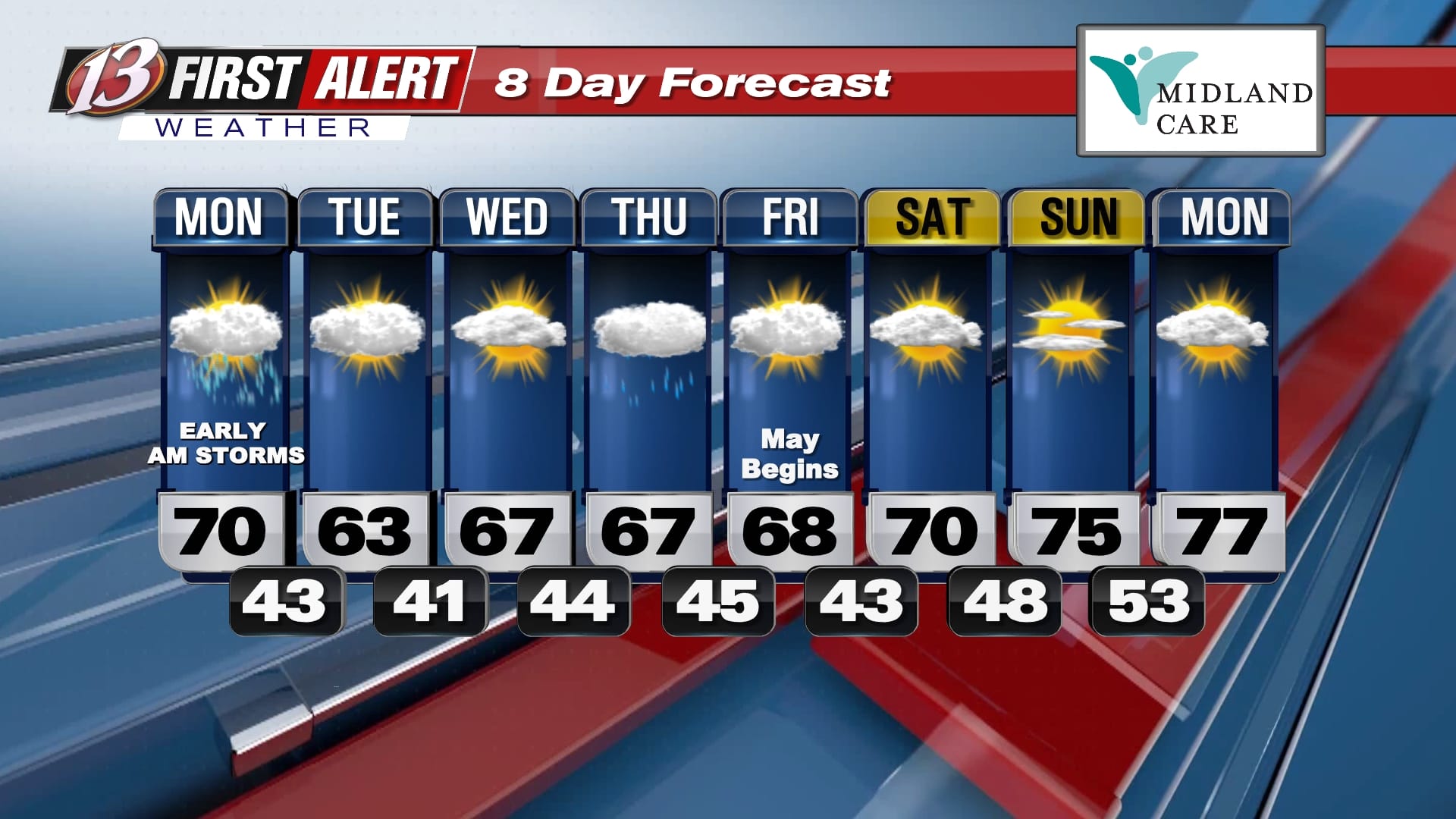
- Keep an umbrella handy today for likely showers and thunderstorms before 4 p.m., including the risk of severe weather, followed by clearing skies and a high near 71.
🌾 Kansas
-
A severe weather system swept Kansas from Sunday into Monday, producing tornadoes, large hail up to golf-ball size and structural damage across central, eastern and southeastern parts of the state, with multiple tornado touchdowns reported in Labette and Montgomery counties and no injuries confirmed. →
-
Insurance brokerage Lockton Cos. unveiled plans for a $765.7 million headquarters development called Hallbrook North in Leawood, featuring a headquarters tower, child-care facility, retail and restaurant space, with construction expected to begin this summer. →
-
A new AI lab at Fort Hays State University is dramatically cutting research time for students, reducing projects that once took a month to just days and allowing one student to process more than 700,000 images in seven to eight hours instead of two to three days. →
-
Lightning struck and destroyed a 93-foot animatronic sauropod at Field Station: Dinosaurs in Derby during severe weather Saturday night, leaving only the metal skeleton intact after Derby firefighters prevented the flames from spreading to other exhibits. →
-
Kansas Democratic governor candidates Sens. Cindy Holscher and Ethan Corson clashed Sunday over CoreCivic-linked campaign contributions and party establishment ties during a forum in Shawnee, though both staked out nearly identical positions on minimum wage, voting access and reproductive health care. →
🇺🇸 US
-
A gunman opened fire outside the Washington Hilton during the White House Correspondents' Dinner on Saturday, exchanging shots with authorities before being subdued by the Secret Service; suspect Cole Tomas Allen, 31, faces charges of using a firearm during a crime of violence and assault of a federal officer. →
-
President Trump canceled a planned trip by senior negotiators to Islamabad on Saturday, saying Iran's written proposals fell short of U.S. demands on enriched uranium and control of the Strait of Hormuz. →
-
S&P 500 companies are on pace to report year-over-year earnings-per-share growth exceeding 13 percent in the first quarter, the sixth consecutive quarter above that threshold, despite weak consumer sentiment and high oil prices. →
-
A study published in Nature Medicine links the herbicide picloram to rising colorectal cancer rates in adults under 50, with U.S. counties using more of the chemical showing higher incidence even after controlling for income and other pesticides. →
-
Kenya's Sabastian Sawe won the London Marathon on Sunday in 1:59:30, breaking the world record and becoming the first runner to go sub-two hours in a record-eligible marathon; Ethiopia's Yomif Kejelcha also finished under two hours at 1:59:41. →
Weather
April 27, 1861: President Lincoln Suspends the Writ of Habeas Corpus
President Abraham Lincoln authorized General Winfield Scott to suspend the writ of habeas corpus along key military transport routes in Maryland, allowing the Union army to detain suspected Confederate sympathizers without immediate judicial review. The move sparked an intense constitutional clash, as Chief Justice Roger Taney ruled that only Congress—not the president—could suspend habeas corpus, a position later essentially affirmed by the Supreme Court. Lincoln’s decision left a lasting legacy in American law and politics, becoming a central case study in how far executive power may stretch in wartime and how civil liberties can be curtailed in the name of national security.
Found a mistake? Have a news tip or feedback to share? Contact our newsroom using the button below:
