Kelly says Supreme Court tariff ruling could bring relief to Kansas farmers
Kansas governor joins bipartisan panel of governors on CBS, calls for 'more thoughtful' trade policy and coordinated immigration enforcement

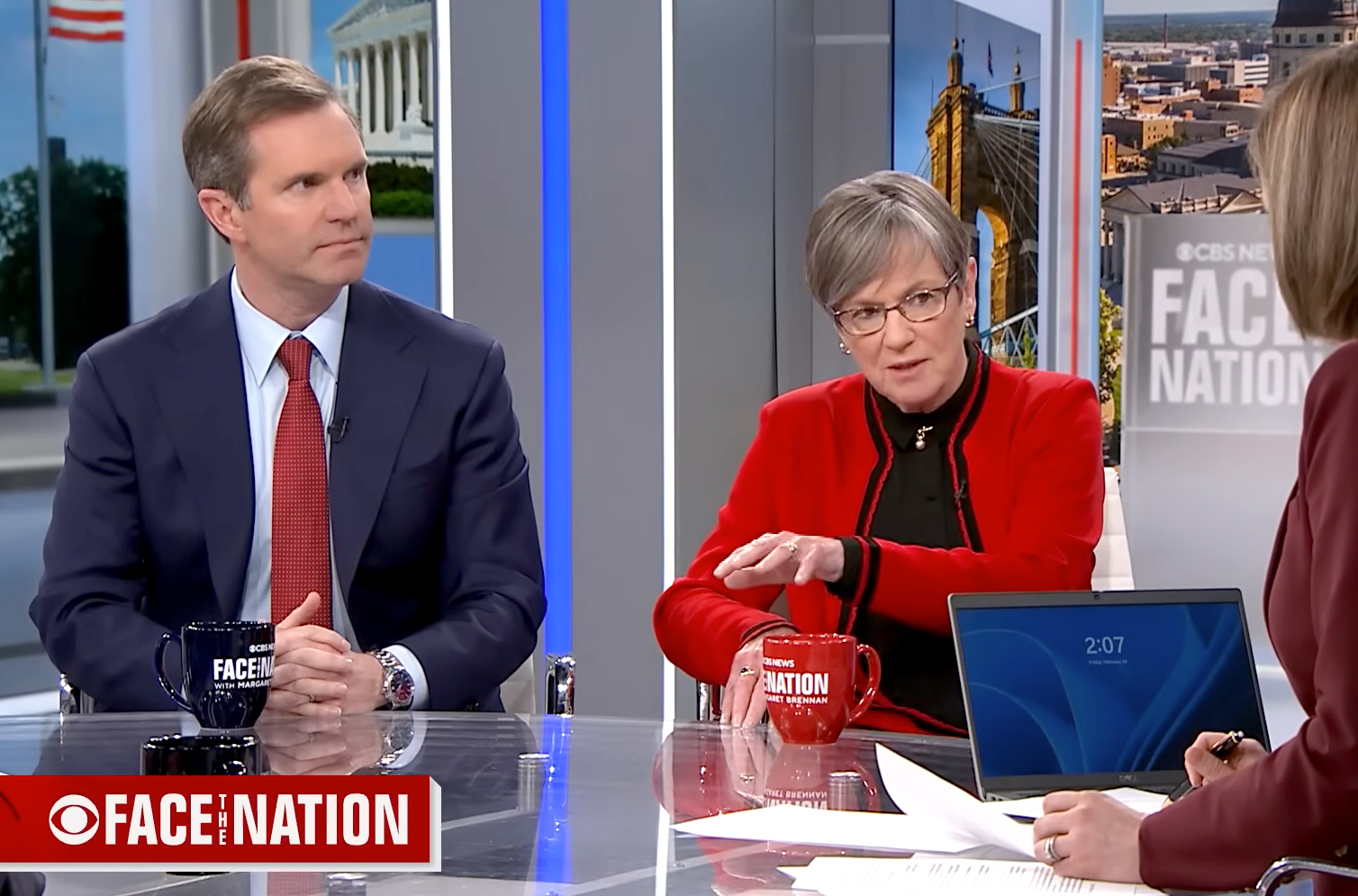
WASHINGTON — Kansas Gov. Laura Kelly appeared on CBS's "Face the Nation" with moderator Margaret Brennan Sunday as part of a bipartisan panel of governors, saying she is "hopeful" and "optimistic" that the U.S. Supreme Court's decision striking down President Donald Trump's sweeping tariffs will bring relief to the state's battered agricultural industry. Kelly, joined by Kentucky Democratic Gov. Andy Beshear, Ohio Republican Gov. Mike DeWine and Indiana Republican Gov. Mike Braun, said Kansas farmers "have been hit very, very hard" by the tariffs and expressed hope the ruling would allow them to "get back to business again." The court ruled 6-3 on Feb. 20 that Trump exceeded his authority by using the International Emergency Economic Powers Act to impose tariffs, a decision handed down while the governors were gathered in Washington for the National Governors Association's winter meeting. Trump responded by announcing a 15% global tariff under a different statute.
Kelly, a Democrat in her seventh year leading a state with a Republican-controlled Legislature, sought to strike a measured tone on trade, clarifying she is not "a proponent of the tariffs at all." She pointed to her support for the U.S.-Mexico-Canada Agreement during Trump's first term as evidence of her preference for negotiated trade deals, saying the pact "was working really well for us." Kansas farmers depend heavily on export markets for grain sorghum, wheat and soybeans, and retaliatory tariffs from trading partners have depressed commodity prices and disrupted supply chains across the state. The Kansas City Federal Reserve has reported a broad slowdown in the agricultural economy, and Kansas grain elevators have faced a glut of unsold sorghum. Kelly urged the administration to evaluate what worked and what did not in its tariff approach, saying, "I hope whatever comes next is more thoughtful."
On immigration, Kelly defended her record of working with federal authorities while calling for better coordination with state and local law enforcement. She signed a 2022 bill that barred Kansas municipalities from enacting sanctuary city policies, a move that drew criticism from immigration advocates but aligned her with Republican lawmakers on the issue. Kelly told Brennan that ICE activity in Kansas communities has created confusion over jurisdiction, and she urged federal agents to partner with local law enforcement rather than conduct enforcement operations unilaterally. She cited the agency's actions in Minnesota as an example of the kind of "free for all" she wants to avoid. Kelly also pushed back on framing immigration as a problem that began under any single administration, noting she has dealt with the issue for more than 20 years in state government.
Kelly emphasized bipartisan governing as a hallmark of her tenure, describing relationships she has built with Republican lawmakers since entering the Kansas Senate in 2005 as one of eight Democrats in a 40-member chamber. She acknowledged that the Legislature's supermajority can override her vetoes but said those relationships have at times helped sustain them. The appearance came during an NGA meeting marked by tension over the White House's initial decision to exclude Democratic governors from a business breakfast with the president, a move that was reversed after NGA Chair Kevin Stitt of Oklahoma objected. All four governors on the panel echoed a common theme: that state executives are pragmatic problem-solvers better positioned to work across party lines than their counterparts in Congress.
Found a mistake? Have a news tip or feedback to share? Contact our newsroom using the button below:
Brought to you by (click me!)
