Kansas Lawmakers Propose Constitutional Amendment to Slash Residential Property Taxes
Senate introduces measure that would lower assessment rate from 11.5% to 9%, requiring voter approval

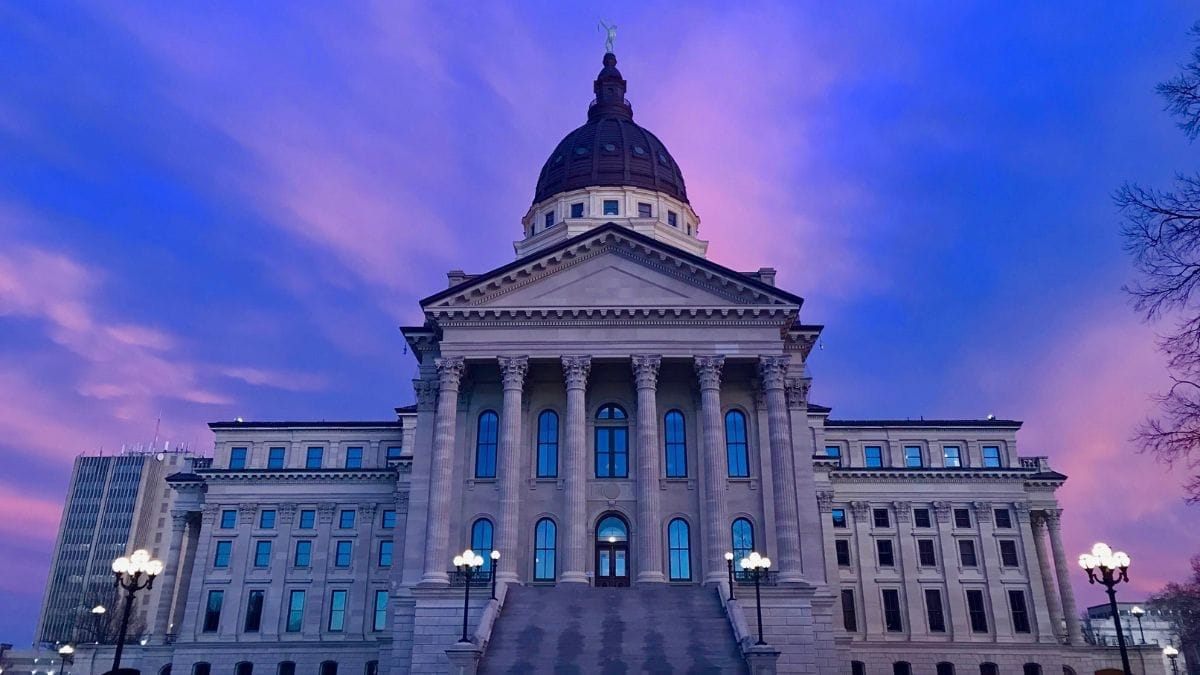
TOPEKA, Kan. — Kansas lawmakers introduced a proposed constitutional amendment Monday that would reduce property taxes for homeowners by lowering the residential assessment rate from 11.5% to 9%, a move that would require approval by two-thirds of both legislative chambers and Kansas voters in November.
Senate Concurrent Resolution 1619, introduced by Sen. Cindy Holscher, D-Overland Park, who represents District 8, would mark the first change to residential property assessment rates since 1993. The current rate traces to a pair of constitutional amendments approved by Kansas voters in 1986 and 1992 that overhauled the state's property tax system. Before those reforms, all property was assessed uniformly at 30% of market value. A 1986 amendment, approved by 70% of voters, established a classified system with different rates for different property types and set the residential rate at 12%. A follow-up 1992 amendment lowered the residential rate to 11.5%, where it has remained for more than three decades. The assessment rate determines what portion of a home's appraised market value is subject to taxation. Under current law, a home appraised at $300,000 would have an assessed value of $34,500 — the figure to which local mill levies are applied. The proposed 9% rate would reduce that to $27,000, a 21.7% cut in the taxable base. Kansas uses different assessment rates for different property classes: 11.5% for residential, 25% for commercial and industrial, and 30% for agricultural land based on use value. The measure comes as property tax relief has emerged as a top priority this legislative session, with homeowners across the state facing increased valuations and tax bills.
The proposal faces an uncertain path in the Republican-controlled Legislature, where GOP lawmakers hold supermajorities in both chambers. While property tax relief enjoys bipartisan support in principle, Republicans and Democrats have advanced competing approaches to the issue. Republicans have focused on capping annual assessment increases, most notably through Senate Concurrent Resolution 1616, which would limit home value assessments to 3% annual growth. Democrats, including Holscher, have favored adjusting the assessment rate itself and expanding homestead exemptions. House Democrats proposed a similar reduction to a 9% residential assessment rate in 2023 as part of a broader affordability package. Legislative leaders from both parties have identified property taxes as a central concern, with Senate President Ty Masterson calling it a "property tax crisis" and House Speaker Dan Hawkins saying Kansans "really hate property tax."
Critics of property tax relief measures have raised concerns about the potential impact on local government services and school funding. The Kansas Legislative Research Department has projected that related proposals capping assessment increases could cost the state $1 billion in school revenue over five years, funds that would need to be offset by the State General Fund. Spencer Duncan, a lobbyist for the League of Kansas Municipalities, has warned that tax relief measures could undermine cities' ability to provide essential services. "Our primary functions as local government is to keep you safe with our public safety programs and to keep your roads open and your water flowing," Duncan said. "And if we can't do that, then that obviously becomes a real problem." The Kansas Farm Bureau, the Kansas Association of School Boards and the Kansas Association of Realtors have all opposed the Republican-backed assessment cap in SCR 1616, arguing it fails to address local government spending and could shift tax burdens to agricultural and commercial properties. Similar concerns could apply to rate reductions like Holscher's proposal.
The fiscal impact on local governments would depend on how taxing jurisdictions respond to reduced residential assessments. Under current law, cities, counties and school districts could raise mill levies to maintain revenue levels, potentially negating savings for homeowners. The Kansas Department of Revenue has estimated that related property tax proposals could reduce state revenue by roughly $800 million over five years. School districts, which rely heavily on property tax collections, face particular uncertainty. The state assesses 20 mills to finance public education, and legislative analysts have warned that assessment reductions without corresponding state funding increases could force difficult choices between raising local levies and cutting educational programs. The Legislature adjourns March 27, giving lawmakers limited time to advance any constitutional amendment for the November ballot.
Found a mistake? Have a news tip or feedback to share? Contact our newsroom using the button below:
Brought to you by (click me!)
