Kansas daily brief
Kansas news for busy people - Jun 30, 2026 edition


🌾 Kansas
-
U.S. Sen. Roger Marshall said June 28 he will remain on the 2026 Kansas ballot and ruled out accepting a Trump administration appointment, closing off speculation that a new state law could be used to install a successor and avoid a competitive Senate race. →
-
Some 124 of 157 laws passed during Kansas's 2026 legislative session take effect July 1, including a statewide kratom ban, a Purple Heart State designation, expanded optometrist scope of practice, and 18 measures enacted over Democratic Gov. Laura Kelly's vetoes. →
-
Groundwater Management District 3 in southwest Kansas is weighing a binding plan to cut irrigation pumping roughly 5% annually — about 27.7% over 20 years — to slow the rapid depletion of the Ogallala Aquifer ahead of a state-imposed July deadline. →
-
Kansas Secretary of State Scott Schwab has used the federal SAVE immigration database to cross-check voter rolls for noncitizens, referring flagged cases to Attorney General Kris Kobach, whose office says it has prosecuted three noncitizens who cast ballots. →
-
Secretary of State Scott Schwab said June 29 that Kansas will not count mail ballots arriving after Election Day, responding to a U.S. Supreme Court ruling that allows — but does not require — states to accept late-arriving ballots. →
🇺🇸 US
-
The Supreme Court ruled 6-3 in Trump v. Slaughter on June 29, 2026, that presidents may fire leaders of independent federal agencies at will, overturning the 91-year-old Humphrey's Executor precedent; a separate 5-4 ruling the same day blocked Trump from immediately removing Federal Reserve Governor Lisa Cook. →
-
The Supreme Court ruled 5-4 in Watson v. Republican National Committee on June 29, 2026, that states may count mail-in ballots postmarked by Election Day but received days later, preserving grace-period laws in roughly 15 states ahead of the 2026 midterms. →
-
The Supreme Court ruled 6-3 on June 29, 2026, in Chatrie v. United States that police must obtain a warrant before using geofence requests to collect cellphone location data from everyone near a crime scene, extending Fourth Amendment protections to bulk digital location records held by third-party companies. →
-
Rocket Lab announced June 29, 2026, it will acquire satellite-communications company Iridium in an $8 billion cash-and-stock deal, giving the launch company control of a 66-satellite network and global spectrum licenses in a direct challenge to SpaceX's Starlink model. →
-
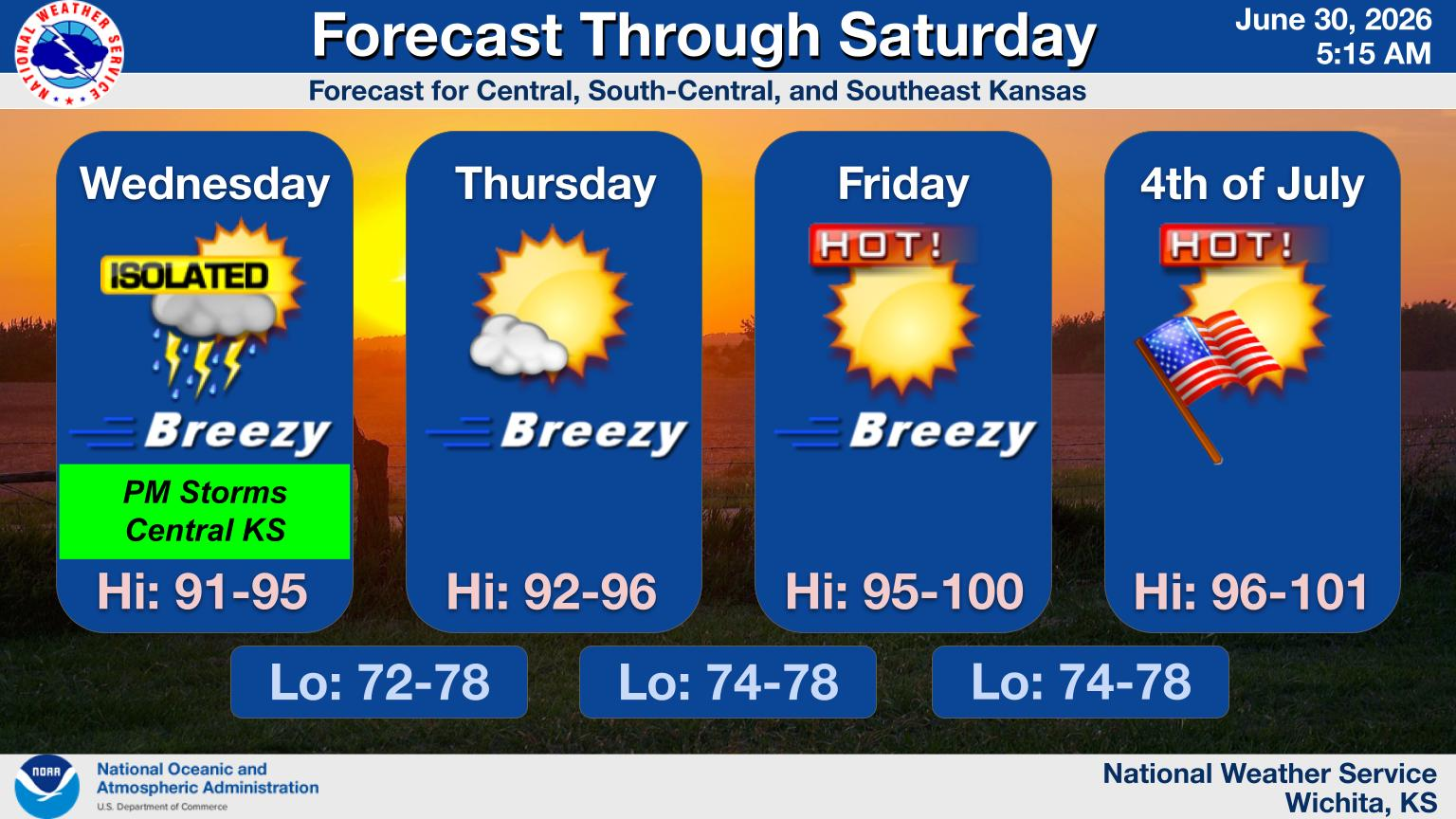
A heat dome settled over much of the central and eastern U.S. this week, placing more than 160 million Americans under heat alerts with forecasters projecting heat index values of 110–115 degrees and potential record highs in cities including Washington, Philadelphia, and New York around the July 4 holiday. →
Weather
JUNE 30 1905: EINSTEIN PUBLISHES SPECIAL THEORY OF RELATIVITY
Einstein’s paper “On the Electrodynamics of Moving Bodies” upended 200 years of Newtonian physics by showing that space and time are relative to the motion of the observer. It introduced a new framework in which the speed of light is constant for all observers, forcing scientists to rethink simultaneity, distance, and time itself. This breakthrough laid the groundwork for modern physics, ultimately leading to technologies from GPS to nuclear energy and transforming our understanding of the universe.