Four Decades of Change: The Buildings of USD 418
Seven district insiders reflect on decades of change ahead of the March 3, 2026 bond vote

The Subjects:
- Steve Salter, former Vice Principal, McPherson Middle School (30 years)
- Becky Greer, former Principal, Eisenhower Elementary
- Randy Watson, former USD 418 Superintendent
- Glenda Sims, retired USD 418 teacher (35 years across four buildings)
- Jeff Johnston, USD 418 Board of Education member (30 years)
- Chris Wiens, former USD 418 Board of Education member (2012–2020)
- Perry McCabe, former USD 418 Assistant Superintendent (1989–2001); current Board of Education member
On March 3, 2026, USD 418 voters will decide on an $89.5 million, two-part bond election that could shape our school district's future for decades to come. As local residents prepare to cast their ballots, questions abound about what this funding would support, how it would be implemented, and what it means for our community.
Over the coming weeks, this investigative series will examine USD 418 from several angles—through district records, facility assessments, and conversations with administrators, teachers, parents, and students. Our goal isn't to tell you how to vote, but to cut through rumors and provide the facts you need to make an informed decision.
Education is the cornerstone of our community. Whether you're a parent, taxpayer, or concerned citizen, you deserve transparency about how your schools operate and what this bond would mean. Join us as we shine a light on USD 418 and ensure every voter can participate with confidence.
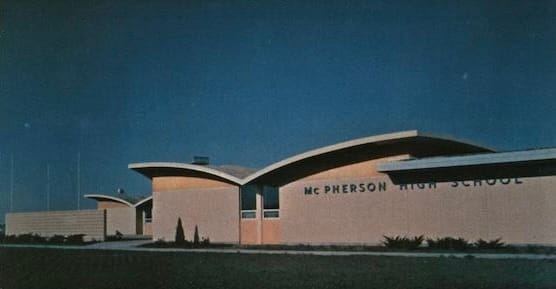
To understand how McPherson arrived at this moment, it helps to look back at the decades of facility decisions, growth, and maintenance that preceded it. Seven people who lived that history shared their perspectives.
The 1980s: A Building from Another Era
Steve Salter served as Vice Principal at McPherson Middle School for three decades. When he arrived in the early 1970s, the building — constructed in 1938 as the original high school — had no air conditioning. Band class met in the basement beneath the stage. The cafeteria was tucked under the gymnasium. Before the mid-1980s bond, the school had a simple heat policy: if the building hit 83 degrees by 11 a.m., students went home at 1 p.m. That bond added classrooms, a proper lunchroom, and brought air conditioning for the first time.
Glenda Sims, who moved to McPherson in 1981, remembered being struck by the community's pride in its schools. "I found that so refreshing — to move to a community where they really supported their schools," she said.
The 1990s: Growth and the Eisenhower Bond
By the early 1990s, McPherson was growing fast. Lincoln Elementary had swelled past 600 students, with portable trailers on the playground to handle the overflow. "We were bursting at the seams," Sims recalled. "And not just at Lincoln, but at the other schools too."
Randy Watson, then Assistant Superintendent, said the district convened a study group of roughly 45 community members. Their initial recommendation — reorganizing into grade-level centers and busing children across town — was rejected at a standing-room-only public forum. The community wanted neighborhood schools, so the district built Eisenhower Elementary instead.
Perry McCabe, who arrived in 1989 as Assistant Superintendent, walked into the tail end of the mid-1980s bond work — crews were still finishing the middle school additions when he started. The community passed the bond that built Eisenhower in the early 1990s, expanded the high school, and completed work at Washington. Becky Greer was hired as Eisenhower's founding principal. The transition required redrawing boundaries and redistributing staff, but Greer said the community partnership made it "very, very smooth."
The 2000s and 2010s: Maintenance and Smaller Bonds
As growth leveled off, the district's focus shifted to upkeep. Watson, who became Superintendent around 2004, oversaw an aggressive Capital Outlay program targeting heating and cooling — particularly at the aging middle school and high school. Sims, who transferred to the middle school in 2006, said the contrast with Eisenhower was stark: "Old carpeting, leaking windows, cracked walls, very dim lighting."
The district passed at least two smaller, tax-neutral bonds, funding additions at Lincoln, Roosevelt, and Washington, and finishing classrooms at Eisenhower for Head Start. Chris Wiens, who served on the board from 2012 to 2020, recalled a mid-2010s bond that tackled structural problems at the high school. "There were some hexes that were pulling away from the foundation," she said. "In the science room, you could stick your hand through the wall." That bond passed overwhelmingly — but everyone acknowledged it was a stopgap. "It was just going to give us a few more years, a few more miles out of everything," Wiens said.
Around 2018, the board hired an architectural firm for a comprehensive facilities study. The findings pointed to major needs at both the high school and middle school — the same issues a separate 2025 study would confirm.
The 2020s: Division, Failed Bonds, and Declining Enrollment
Then came COVID-19, which Wiens described as a catalyst for extreme community division and growing mistrust of institutions. "People have just been so distrusting of public officials now," she said. The board had started some facilities work before the pandemic, McCabe, who had moved back to McPherson after retiring said, but "then COVID hit, and that kind of put 'em on hold for several years."
Three bond proposals failed — in June 2021 by a wide margin, in May 2023 by fewer than 200 votes, and again in November 2023. McCabe, who was appointed to the board around that time, watched the last attempt fall short firsthand.
After the November 2023 election, the newly seated board embarked on a fresh start. They worked with the Kansas Association of School Boards to develop a new strategic plan for the district. From there, McCabe said, the board hired IDS as its architects to conduct long-range and short-range facility planning. "We had all sorts of community meetings and input," he said, "so we could basically see what the community wanted."
Meanwhile, enrollment continued to slide — down 13.3% over the past decade, with graduating classes dropping from over 200 to closer to 150. McCabe noted the enrollment study coincided with the IDS work, and both reached the same conclusion: the district needed to close a building. A 2025 facility report put the price tag in stark terms — $13.8 million in maintenance at the middle school, $15.5 million at the high school.
The March 3 Vote
The 2026 bond is structured as two questions.
- Question 1 ($62.5 million) funds high school renovations and elementary security upgrades with no tax increase — it replaces expiring bonds.
- Question 2 ($27 million), contingent on the first passing, would convert Eisenhower Elementary into the district's new middle school by increasing the mill levy — roughly $9 per month on a $200,000 home.
Repurposing the 30-year-old Eisenhower building instead of constructing new avoids tens of millions in capital costs and eliminates the $13.8 million maintenance backlog at the 1938 building. The district estimates the move would also save $1–2 million per year in operating costs, freeing general-fund dollars for classroom instruction. The district plans to close Eisenhower Elementary regardless of the outcome — declining enrollment has made consolidation inevitable. The question before voters is whether to repurpose Eisenhower as a modern middle school or continue maintaining the aging building.
CHAT WITH ALL 7 DISTRICT INTERVIEW SUBJECTS
This transcript was generated from 7 phone interviews and edited with AI assistance. Errors are possible. Consider this experimental—I trust this community to read it in good faith.
Found a mistake? Have a news tip or feedback to share? Contact our newsroom using the button below:
citizen journal offers three flagship products: a daily national news summary, a daily Kansas news summary, and local news and school board summaries from 20 cities across Kansas. Each issue contains 5 paragraph-length stories that are made to be read in 5 minutes. Use the links in the header to navigate to national, kansas, and local coverage. Subscribe to each, some, or all to get an email when new issues are published for FREE!
