Aging Buildings, Critical Choices: McPherson Schools Head to Fourth Bond Vote
After three defeats, $89.5 million proposal returns to voters March 3

On March 3, 2026, USD 418 voters will decide on an $89.5 million, two-part bond that could shape our school district's future for decades to come. As local residents prepare to cast their ballots, questions abound about what this funding would support, how it would be implemented, and what it means for our community.
Over the coming weeks, this investigative series will examine USD 418 from several angles—through district records, facility assessments, and conversations with administrators, teachers, parents, and students. Our goal isn't to tell you how to vote, but to cut through rumors and provide the facts you need to make an informed decision.
Education is the cornerstone of our community. Whether you're a parent, taxpayer, or concerned citizen, you deserve transparency about how your schools operate and what this bond would mean. Join us as we shine a light on USD 418 and ensure every voter can participate with confidence.
Introduction
For McPherson, school facilities have become impossible to ignore. After three failed bond proposals—June 2021 (rejected by a wide margin), May 2023 (narrowly missing by fewer than 200 votes), and November 2023—the community returns to the polls on March 3, 2026. The case for action is no longer just about visible decay—flooded bathrooms and failing HVAC systems—but is now backed by two comprehensive independent studies. A May 2025 Enrollment Analysis by RSP & Associates confirmed the need to right-size district operations, while a September 2025 Facility Report Card by incite Design Studio (iDS) placed a price tag on the decay. Students are learning in structures dating to the Great Depression and early 1960s, facing physical and fiscal challenges.
The Demographic & Physical Reality
McPherson faces shifting demographics and crumbling infrastructure. According to RSP & Associates, district enrollment has declined 13.3% over the last decade and is forecast to drop another 5.3% by 2029/30, driven by falling birth rates in McPherson County. Simultaneously, building conditions have reached a tipping point. Continuing to maintain under-utilized, aging facilities is fiscally unsustainable; the RSP study warns that oversized buildings can create a less conducive learning environment and lead to inefficient use of school funds.
Middle School: 87 Years and Rising Costs
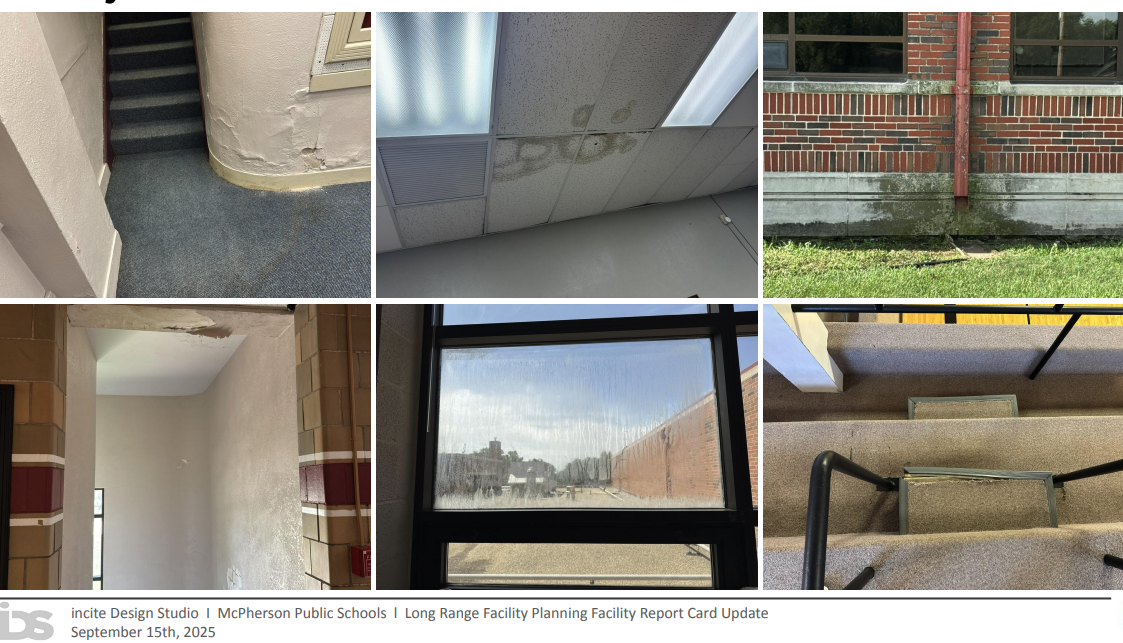
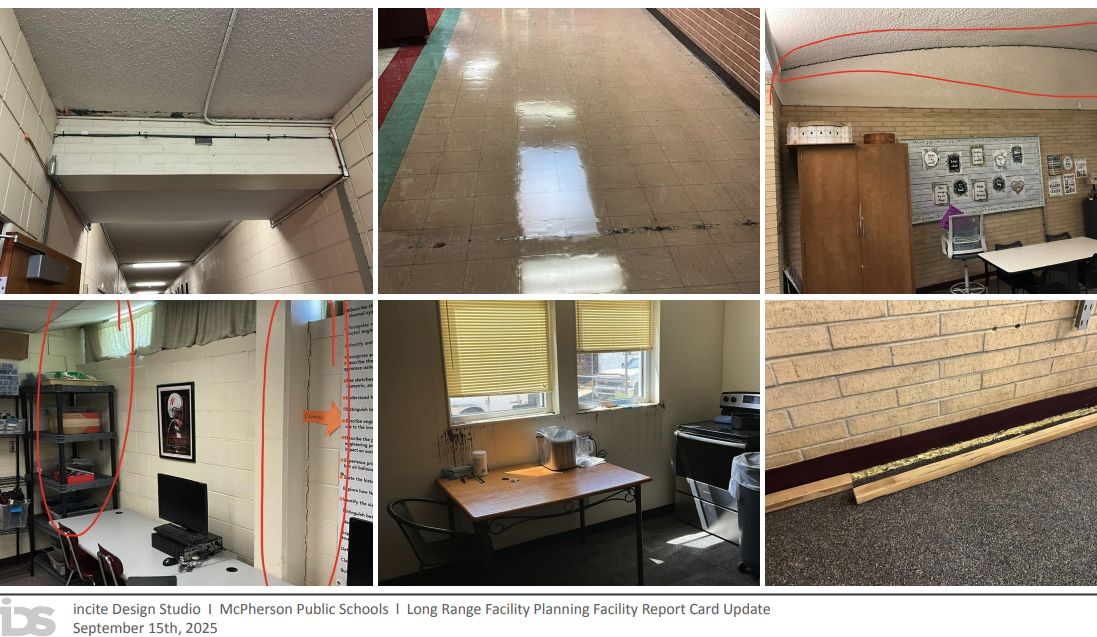
McPherson Middle School, built in 1938 during the Great Depression, stands as a testament to a different era. At 87 years old, the facility predates air conditioning, modern accessibility standards, and contemporary security requirements. The school is forecast to see a 6.6% enrollment decrease over five years. The iDS Report Card estimated $13.8 million in deferred maintenance just to maintain the current structure. Beyond the sticker price of repairs, the building's daily operating costs drain the district's general fund—heating, cooling, and staffing a sprawling, inefficient 1938 building for a shrinking population diverts dwindling per-pupil funds that could otherwise support classroom instruction. The bond proposal explicitly targets these operating costs as a key area for savings.
High School: Infrastructure at Its Breaking Point
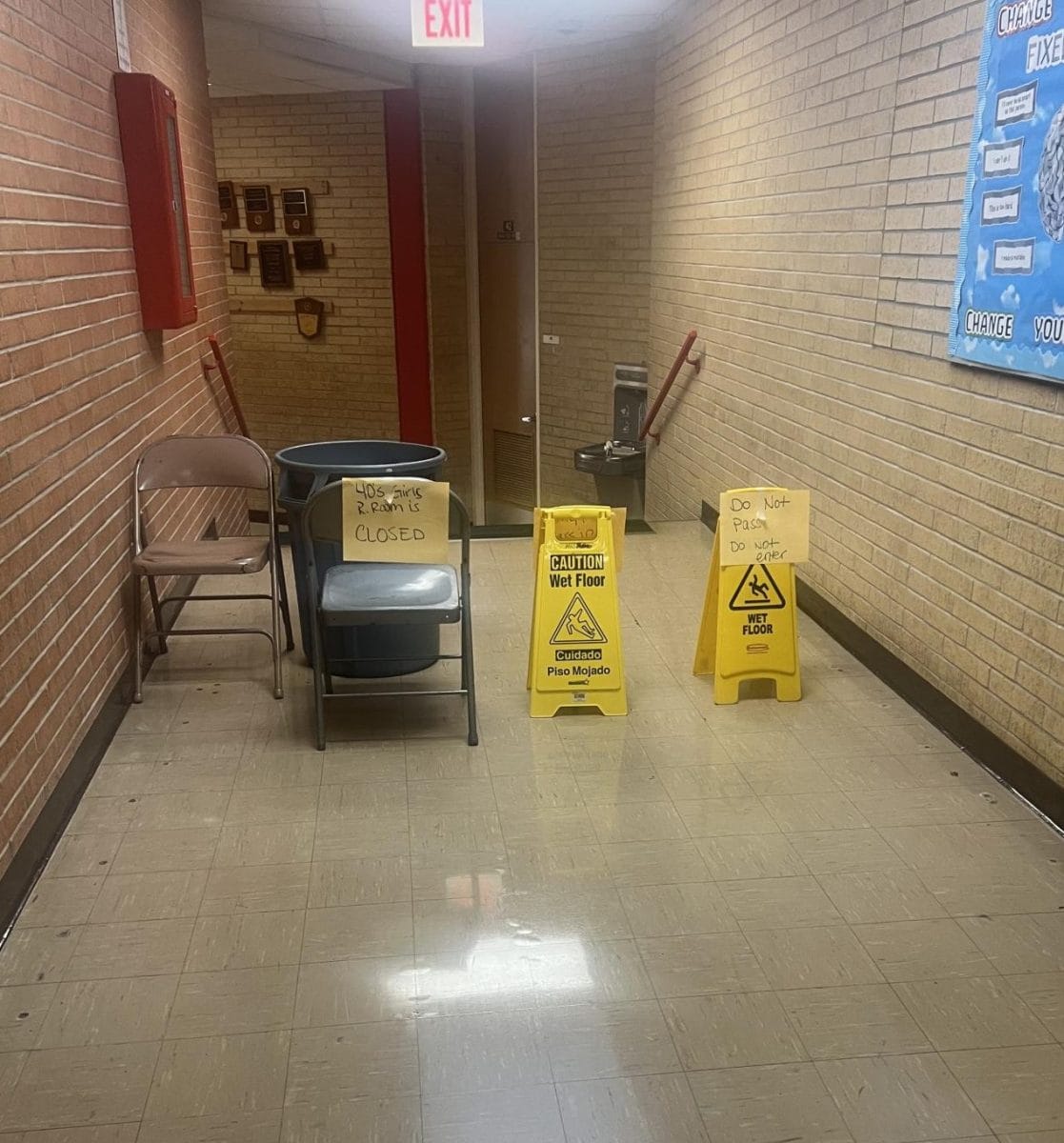
McPherson High School, with its iconic Roundhouse gymnasium from 1963, faces an infrastructure crisis. On the second day of 2025 classes, students were sent home when HVAC systems failed, causing classroom temperatures to spike between 80 and 90 degrees. These are not isolated incidents. Student journalists at The High Life documented flooded bathrooms shutting down entire hallways in October 2025. The Roundhouse suffered catastrophic damage during a June 2025 storm, when a "200-year storm" dumped up to 10 inches of rain, flooding the gym floor and leaving student-athletes without a home court for 203 days. The iDS study estimates $15.5 million in deferred maintenance, with the high school operating at only 63.5% functional capacity—meaning nearly half the building sits empty or under-utilized while consuming maintenance dollars.
District Facebook video about high school
What's in the Bond
The March 2026 bond proposal ($89.5 million) addresses the physical decay and utilization inefficiencies identified in both studies. Question 1 ($62.5 million) is tax neutral—it replaces expiring bonds, meaning no increase to property taxes—and funds critical high school renovations and secures entrances at Lincoln and Roosevelt elementary schools. Question 2 ($27 million), contingent on the first passing, addresses the right-sizing necessity by transforming Eisenhower Elementary into the district's new middle school. The iDS report identified Eisenhower as the most fiscally sound candidate for conversion. By moving middle school students to this newer facility, the district eliminates the $13.8 million maintenance backlog of the 1938 building.
Importantly, the district plans to close Eisenhower Elementary regardless of Question 2's outcome—declining enrollment has made consolidation inevitable. The real question for voters is whether to repurpose Eisenhower as a modern middle school or continue pouring money into the 87-year-old "money pit" on Elizabeth Street.
The Cost and The Choice
Because Question 1 replaces expiring bonds, it carries no additional tax burden for homeowners. Only Question 2 would increase taxes—approximately $9.10 per month for the average homeowner.
What's Next
McPherson Public Schools is hosting community information sessions:
Tuesday, February 3: McPherson Middle School (700 E. Elizabeth) from 5:30 to 7:00 p.m.
Thursday, February 5: McPherson High School (801 E. First) from 5:30 to 7:00 p.m.
On March 3, voters will decide whether to patch the problems of the past or build a right-sized district for the future.
Found a mistake? Have a news tip or feedback to share? Contact our newsroom using the button below: